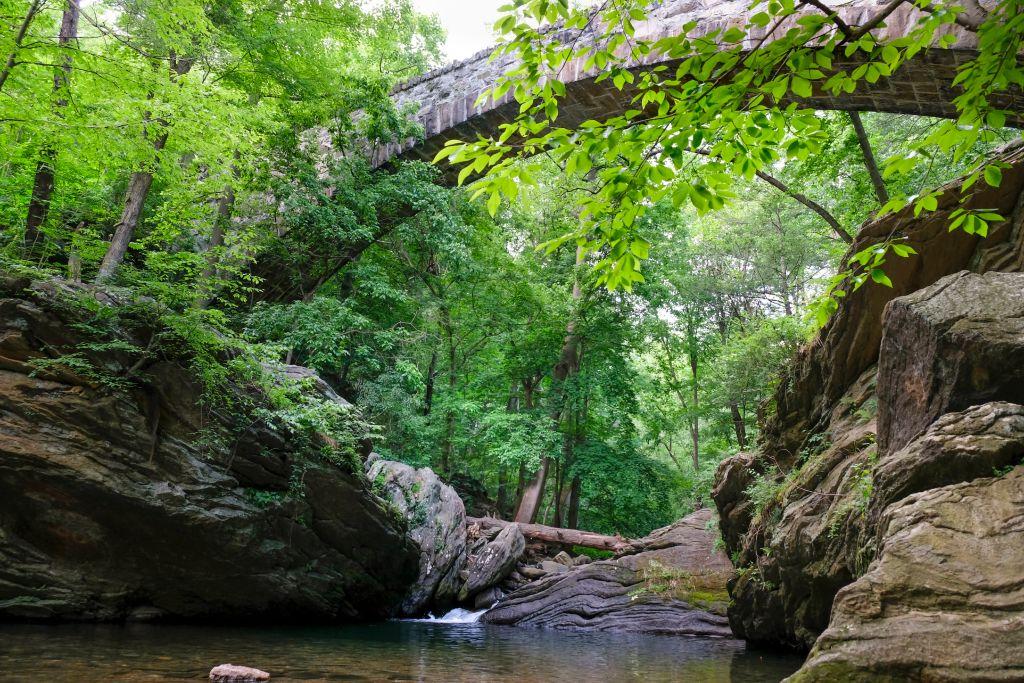
You can find Pennsylvania’s state tree, the eastern hemlock, in Wissahickon Park. But experts say that climate change puts this tree at risk for extinction.
As a result of warmer and wetter temperatures, the eastern hemlock is falling victim to an insect known as hemlock woolly adelgid (HWA), an invasive species native to Asia. The insects attach to the base of a hemlock needle and suck the tree’s sap and nutrients over time. Within five to 10 years, the hemlock will weaken and die.
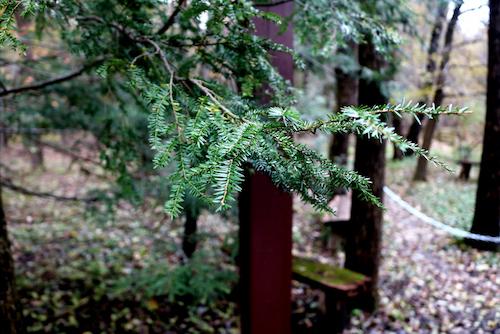
Environmentalists are working to preserve our state tree. (Matthew Roe/Getty Images)
When a giant, 200-year-old hemlock falls in the woods, it sounds “like a gunshot,” according to Jim Altemus, forest health program specialist with Pennsylvania’s Department of Conservation and Natural Resources (DCNR).
“You hear a big crash, you look over, and there’s a tree—you see it bouncing off the ground, and there’s not a breath of wind. Woah,” Altemus told WHYY.
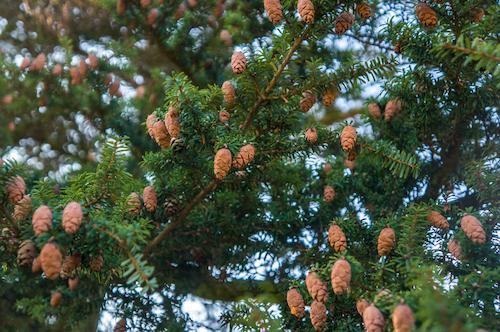
Hemlocks produce really cute pine cones. (Sara Lissaker/Getty Images)
To protect the hemlock, DCNR foresters are chemically treating specific trees as well as releasing predatory beetles or fungi that eat HWA.
DCNR also partnered with the University of Rhode Island to study and identify HWA-resistant hemlocks and then selectively breed them. Learn more on DCNR’s website about the ongoing efforts to preserve the beautiful eastern hemlock.