This was adapted from an article by City Cast Madison executive producer Molly Stentz and Hey DC newsletter editor Kaela Cote-Stemmermann.
On Monday, April 8, a wide swath of North America will plunge into darkness in the mid-afternoon. A solar eclipse will occur when the moon passes between the sun and Earth, blocking out our precious sunlight for a few rare minutes.
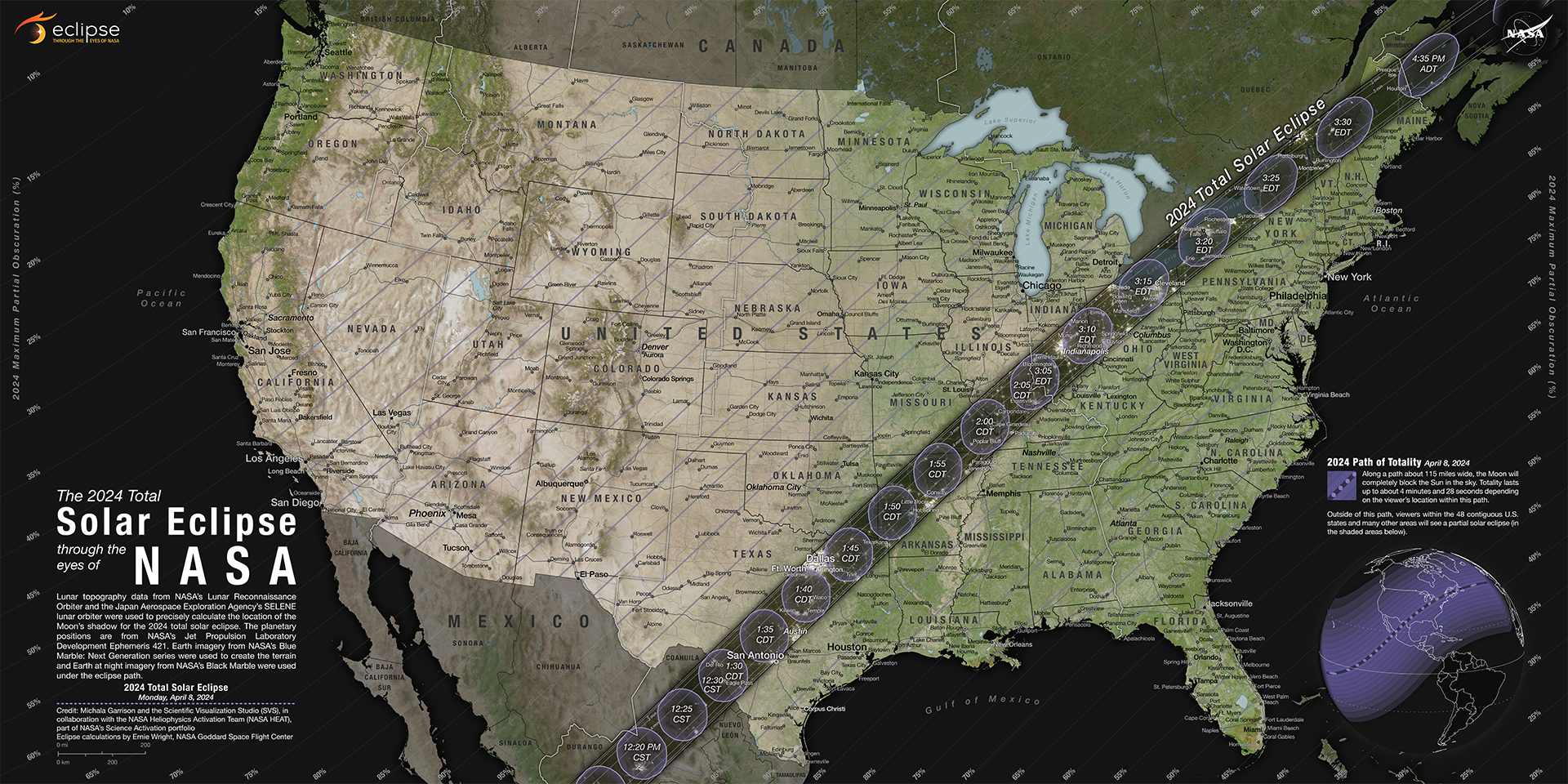
More than 30 million people live in the “path of totality,” meaning they’ve got a front-row seat to the astronomical event. Philadelphia is sadly not in the path, so we will only see a partial eclipse between 2:08 p.m and 4:35 p.m. The maximum eclipse will happen at 3:23 p.m., when the sun will be over 90% covered by the moon.
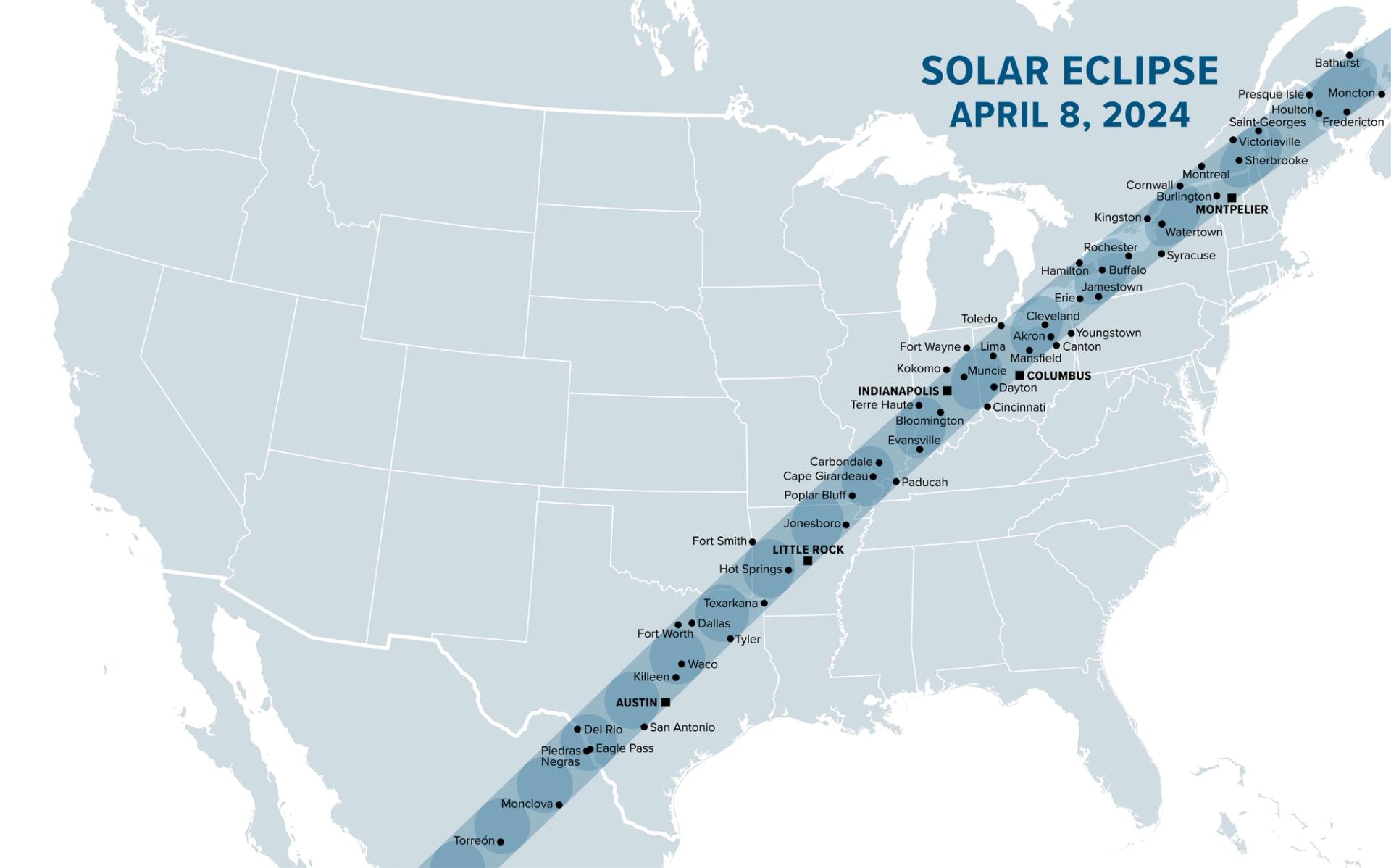
Path of totality map for the April 8 total eclipse. (PeterHermesFurian/Getty Images)
The next full solar eclipse in the U.S. won’t occur until 2044, in another 20 years. But eclipse chasers could catch one in 2026 in Greenland, Iceland, or Spain.
What To Expect
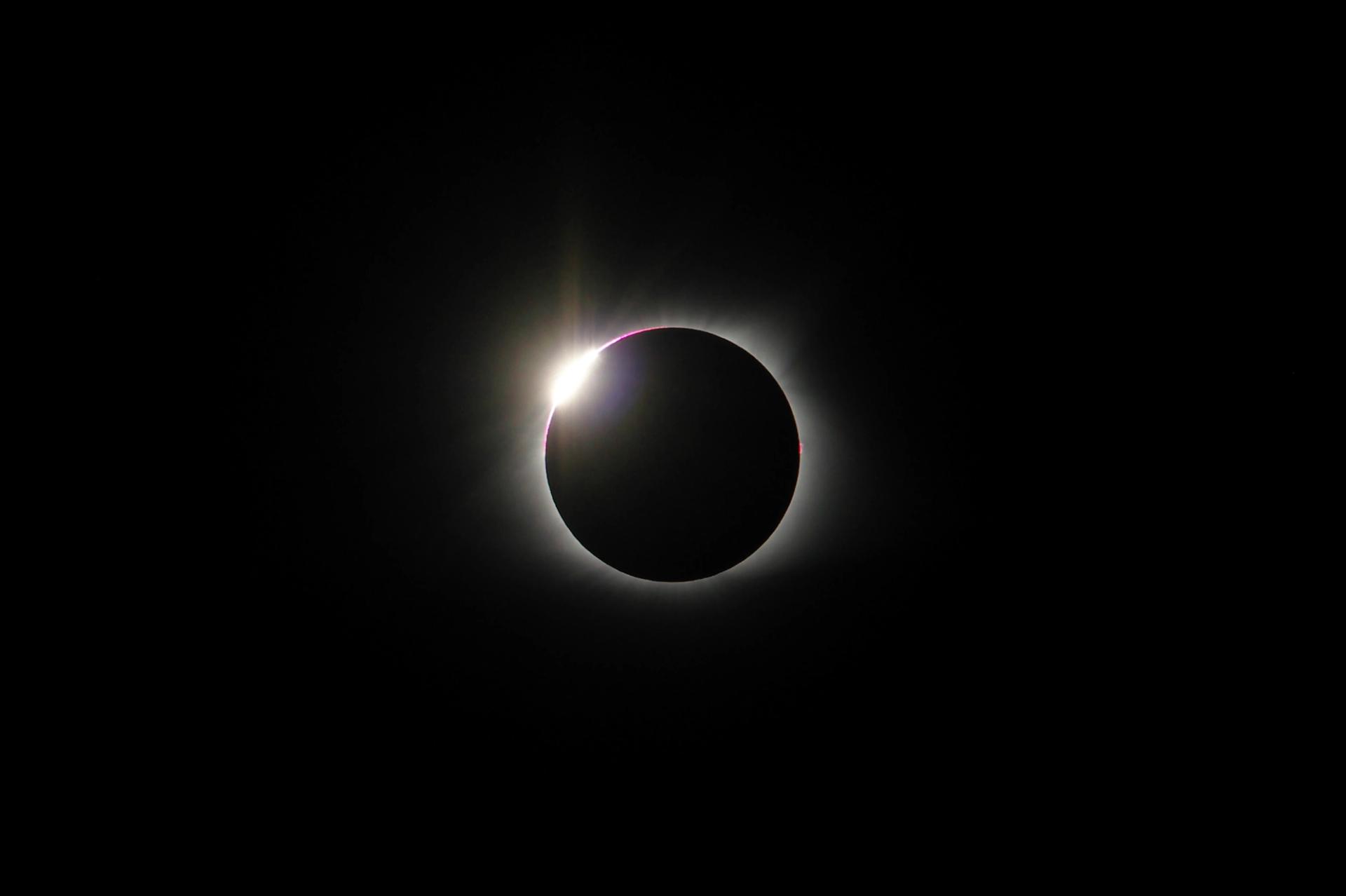
If the sky is clear, viewers will be able to see a “diamond ring” effect when the moon passes over the sun. You may also sense a drop in temperature, a shift in the wind, and a quieting of wildlife. The farther away you are from the path of totality, the less dramatic this effect will be.
Interestingly, colors with shorter wavelengths (green, blue) will appear brighter during the eclipse than those with long wavelengths (red, orange). So wear something green or blue to take advantage of this “Purkinje effect”!
How To Watch
Do not stare at the sun with your bare eyes! There, we said it. Regular sunglasses are not strong enough, so you’ll want to snag a pair of eclipse glasses.
Staples, Walmart, and Wegmans are all stocked up on eclipse-watching glasses that comply with international standards. Don’t try to cheap out and buy them on Temu or Amazon, as many of these are fake!
You can also pick up a pair for free from the Free Library. Warby Parker is handing out a limited supply of free eclipse glasses starting April 1.
Where To Watch
From Your Own Stoop
If you are watching the eclipse right outside your home, the National Air & Space Museum has many suggestions for how to make the most of it, from making solar eclipse art to multisensory observation activity guides.
Attend One of These Watch Parties:
- The Franklin Institute (Free, Center City)
- Independence Visitor Center (Free, Old City)
- Wagner Free Institute of Science (Free, Cecil B. Moore)
- Glen Foerd (Free, Torresdale)
- Temple University (Free, North Philly)
- The Woodlands (Free, West Philly)
- Morris Arboretum ($20 for general admission to arboretum, Chestnut Hill)
How To Document
Photographing the sun during the total phase of an eclipse is complicated and takes a lot of expensive equipment. However, a partial eclipse shows up nicely on any smartphone or small camera if you do it through a pair of eclipse glasses or a pinhole projection. It is also cool to photograph any eclipse projections that might be happening as a result of nearby shadows!