Philly loves our furry friends. We love them so much, we have the eighth highest dog population among large American cities! But we also kind of have a dog problem – primarily because of their poop. Despite the number of dog parks in the city, there aren’t enough designated places for pups to play or go when they gotta go. Much like how we avoid potholes, stepping around doggy dung has become part of daily life in Philly.
One resident has taken matters into her own hands with her own pet project.
A City Cast Philly subscriber and Cobbs Creek resident who goes by the moniker Coco Hernandez is no stranger to what she calls “Doggie-Doo Dodge Two-Step.” Having moved to the neighborhood a decade ago, she was excited to live in a community that would be perfect to walk her dogs but realized quickly that she had to constantly watch her step. Hernandez said vacant lots are especially susceptible to becoming “dookie land.”
Hernandez has seen signage intended to deter violators, but it can sometimes be a lost cause, especially when other crimes take precedence in the city.
“Occasionally, one might encounter a health department sign: ‘Leash, gutter and clean up after your dog’ listing the $200 fine for getting caught,” Hernandez said. “But... c'mon. Get real. I've yet to see an enforcement on this.”
The current model wasn’t working, so Hernandez wondered if instead of complaining about the problem, she could be part of the solution. Thus, her so-called Just Pick Up The Poo campaign was born.
“Many people don't want to be confrontational when they see dog-walkers not picking up after their dogs.” Hernandez said. “But if there are signs to point to, and especially with a doggie-dookie baggie handy, then you give neighbors a way to attempt to hold neighbors accountable.”
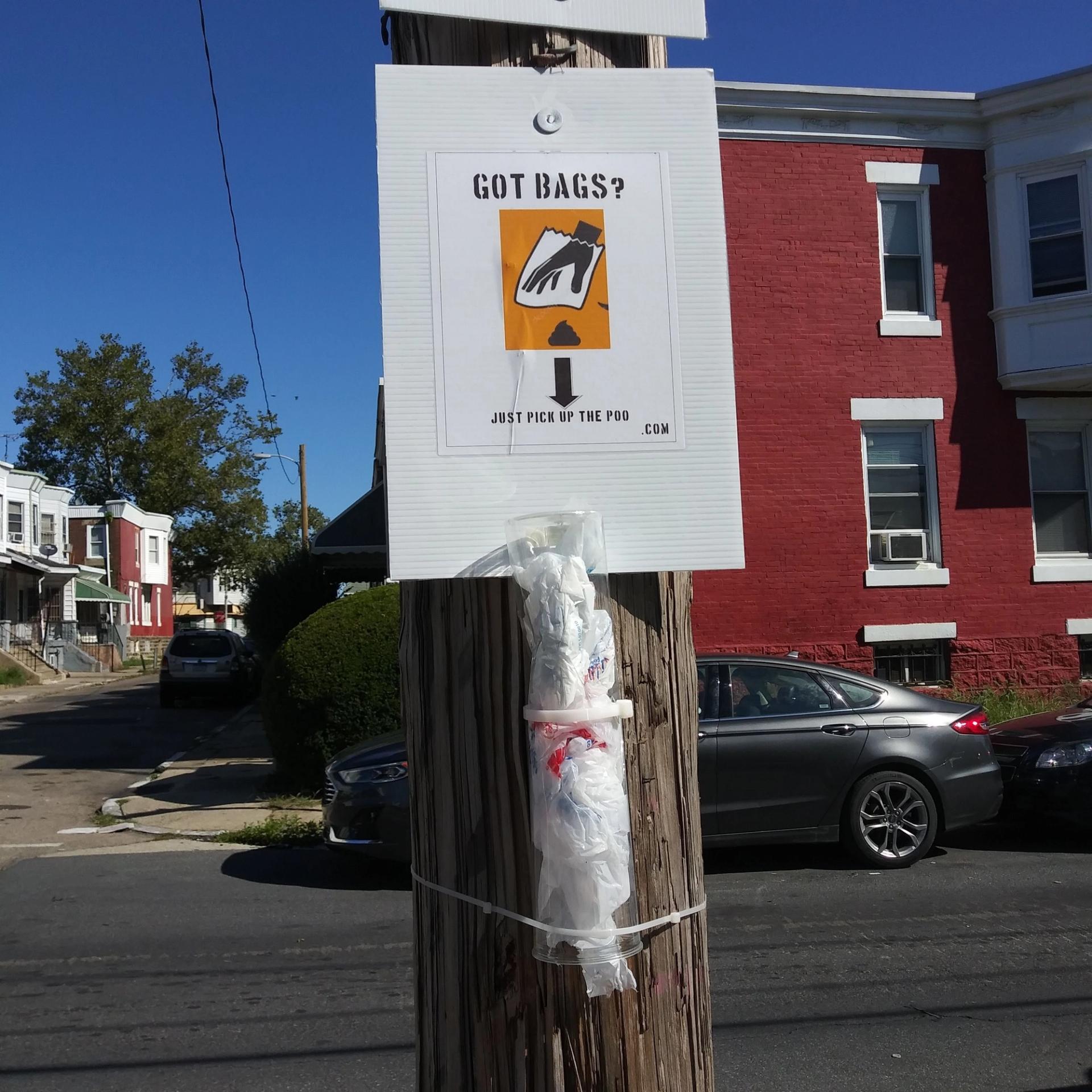
This is what commitment to a cause looks like. (Courtesy of Coco Hernandez)
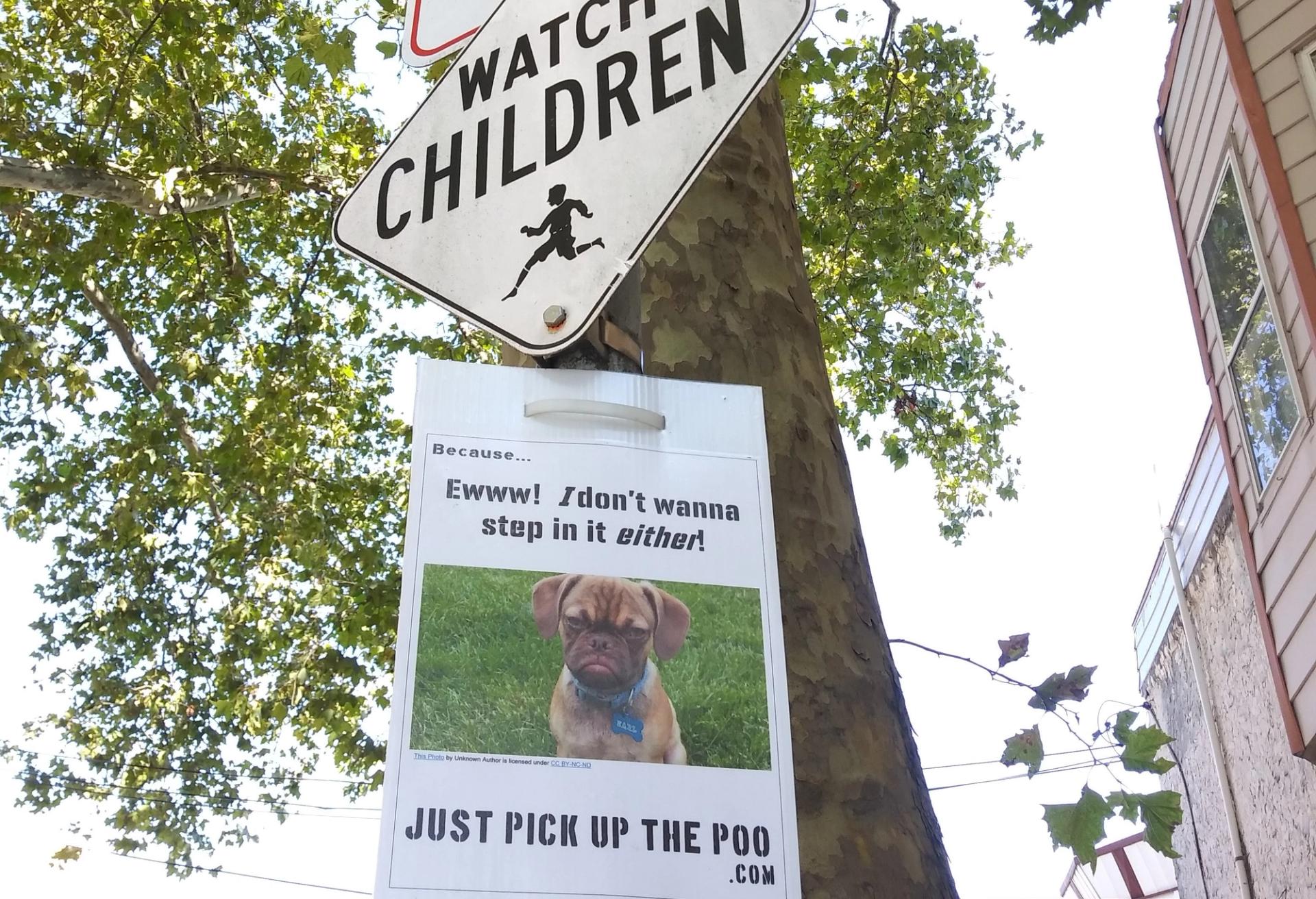
Hernandez attached several posters to poles around the neighborhood depicting upset puppies not wanting to step in their own poop and cartoon police dogs ticketing violators.
“You reach more people with humor than with threats,” Hernandez said. “Make ‘em laugh and you have a better chance to make ‘em remember. Make ‘em remember, you have a better chance to change behaviors, or at least, to spread awareness about the behaviors.”
The signs weren’t meant to just chastise dog owners. The poles also included dispensers filled with plastic bags to grab during walks, which Hernandez made by repurposing empty tennis ball containers.
One of her grievances is when people excuse leaving the poop behind by saying the feces is natural and will decompose on its own.
“Whatta crock!” Hernandez said. “Lemme hear them say that when someone tracks it into their car or into their home on their nice new plush carpeting.”
The Philadelphia Water Department agrees. The department encourages dog walkers to use a bag (preferably biodegradable!) to scoop the poop and prevent the pathogen-filled matter from polluting our waterways.
Hernandez said that neighbors didn't directly follow up with her to share if they took advantage of the dispensers. Because the campaign was a lot to manage on her own, most of the signs have since come down.
But with Mayor Parker’s administration focused on a “safer, cleaner, and greener” city, she hopes officials use this as an opportunity to educate community members and block captains about regulations. In the age of social media, Hernandez wonders if the city could even create a contest to encourage this behavior. Regardless, she wants to see more prominent signage in public spaces.
“Such signage ought to reflect all the different facets of the issue,” Hernandez wrote. “Public health risk – disease spreads through feces, unsightliness, bad smell, children play in parks.”
Hernandez was inspired by PSAs to create her signs and believes they’re an underrated way to spread awareness.
So if you’re having a dog poo problem in your neighborhood, one life hack may be to set up your own makeshift dispenser of plastic bags (if there are any left in the city, that is) and a sign telling people what to do with the doo-doo.
Posting signs on utility poles and other city owned property is illegal, so if you’re doing a DIY job, consider putting it on your own property or collaborating with an organization or business to assist with your distribution.
Dog owners, just be sure to properly dispose of the waste afterwards and don’t just leave it on the ground.
“It is a part of responsible pet-ownership,” Hernandez said. “It shows respect and love for your neighbors, for your park, for your city, for your pets.”