With the last frost of winter behind us, now is the time to break out the gardening gloves. But whether you're a rookie trying out gardening with some potted plants, or you're a pro curating your dream city greenspace, picking the right plant can be the hardest part of your journey.
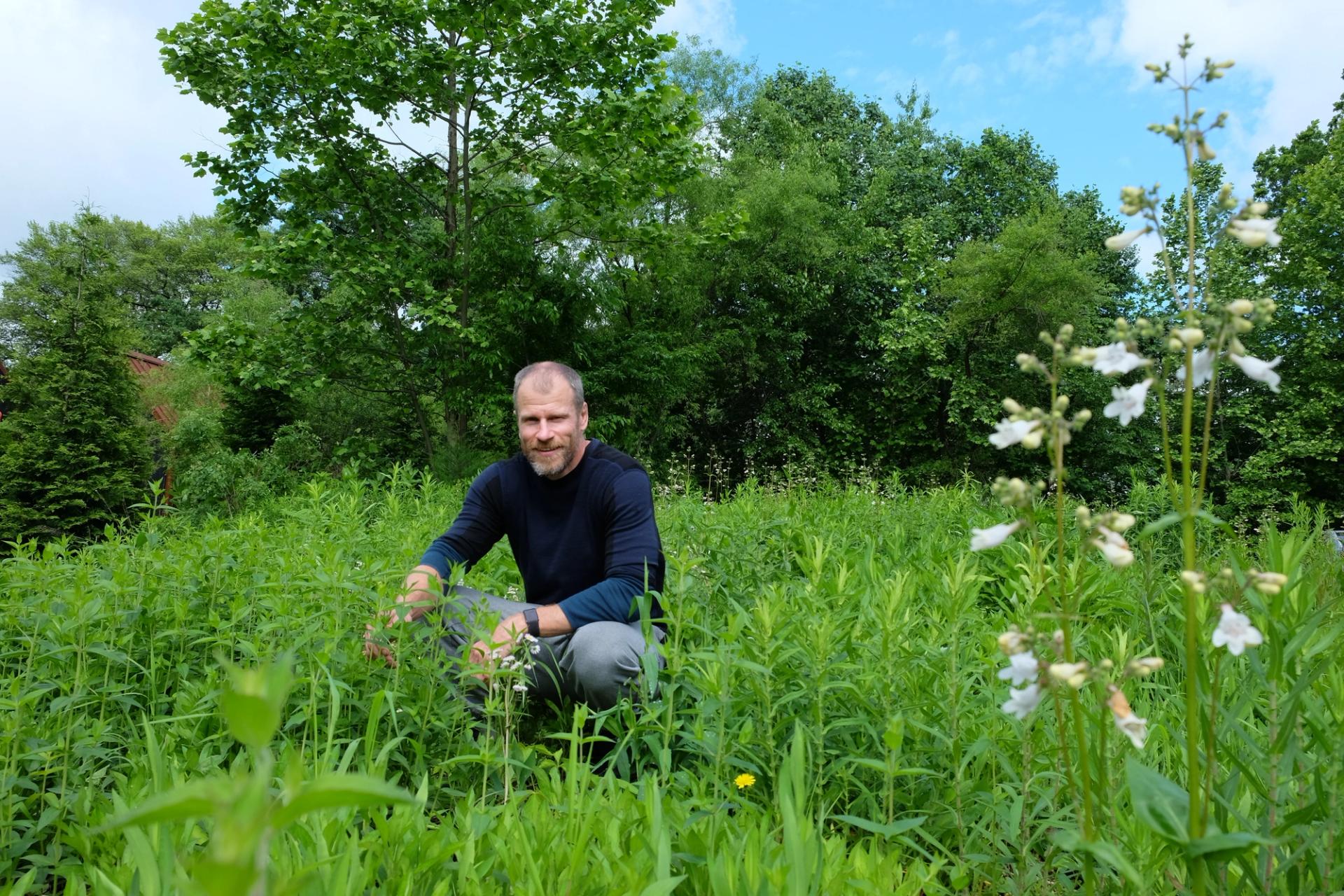
After spending a recent lunch break pulling weeds from his 4,000-square-foot West Mt. Airy native plant meadow, Good Host Plants founder John Janick described why he thinks planting native plants is the best and easiest way to bolster your outdoor space.
Native plants are species of fauna and flora that have grown in the area for thousands of years. Janick, who has sold thousands of native plants out of his home since 2016, says these plants are the building blocks of the ecosystem. They have evolved to thrive in the local climate and provide sustenance for bugs and other wildlife.
"There are over 500 different caterpillars that can feed on an oak tree's leaf,” Janick said. “They turn into butterflies and moths, but they're also food for birds like songbirds."
While some insects can be pests, Janick said they’re also necessary for growing food and keeping out unwanted visitors – bugs like dragonflies, for example, can eat hundreds of mosquitoes in a day.
Janick also emphasized that native plants can save you time and energy in the garden.
"They're really drought resistant, and don't need fertilizers to grow," Janick said. "They're used to our soils, used to our weather, and so ultimately, once they're established, they can be basically maintenance-free."
If you're sold on native plants, here's what Janick recommends for some different garden goals:
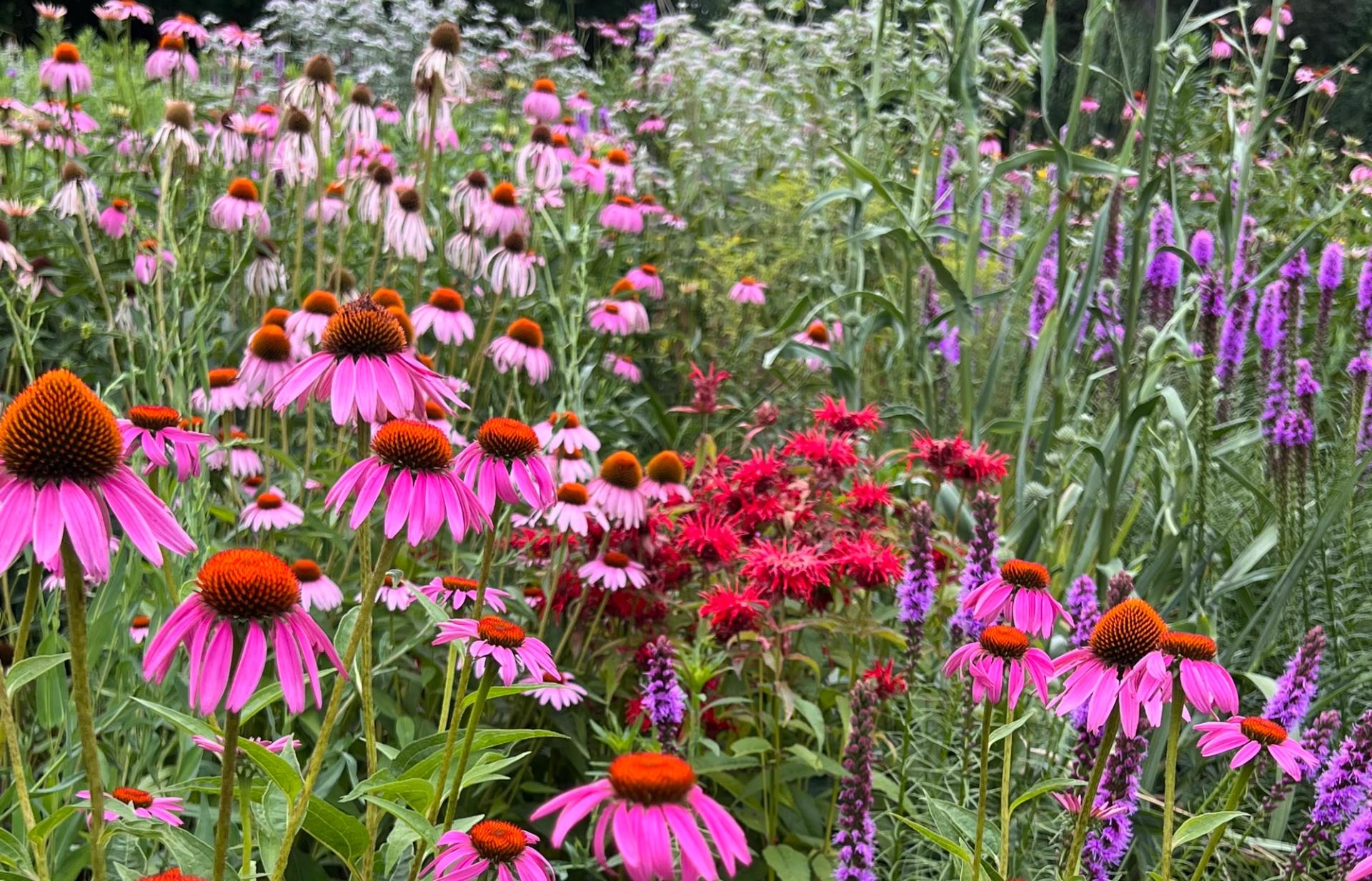
The cone flowers, dense blazing stars, and bee balm are all native to the northeast region of the U.S. (John Janick/Good Host Plants)
Easy To Grow
If ease is what you're going for, then look no further than black-eyed Susans. They're easily recognizable by their yellow flowers, each petal stemming out from a black center. Another option are cone flowers, or echinacea, which are known for their pink petals draped around a brown cone-shaped center. Janick said these are beginner-friendly, drought-resistant, and have long blooming periods.
Sunny Growing Space
If your space needs some color, dense blazing star plants grow tall and have showy flowers that Janick describes as similar to purple fireworks. This description is fitting since these plants need a lot of sun and the peak bloom is around the 4th of July.
Attracts Pollinators
If helping out the butterflies (or just hoping to see more in your backyard) is the goal, consider milkweed, which is a magnet for insects. There are many types of milkweed. Depending what flower color you want, try swamp milkweed, which is a pinkish tint, or butterfly milkweed, which tends to have deeper colors like orange or red.
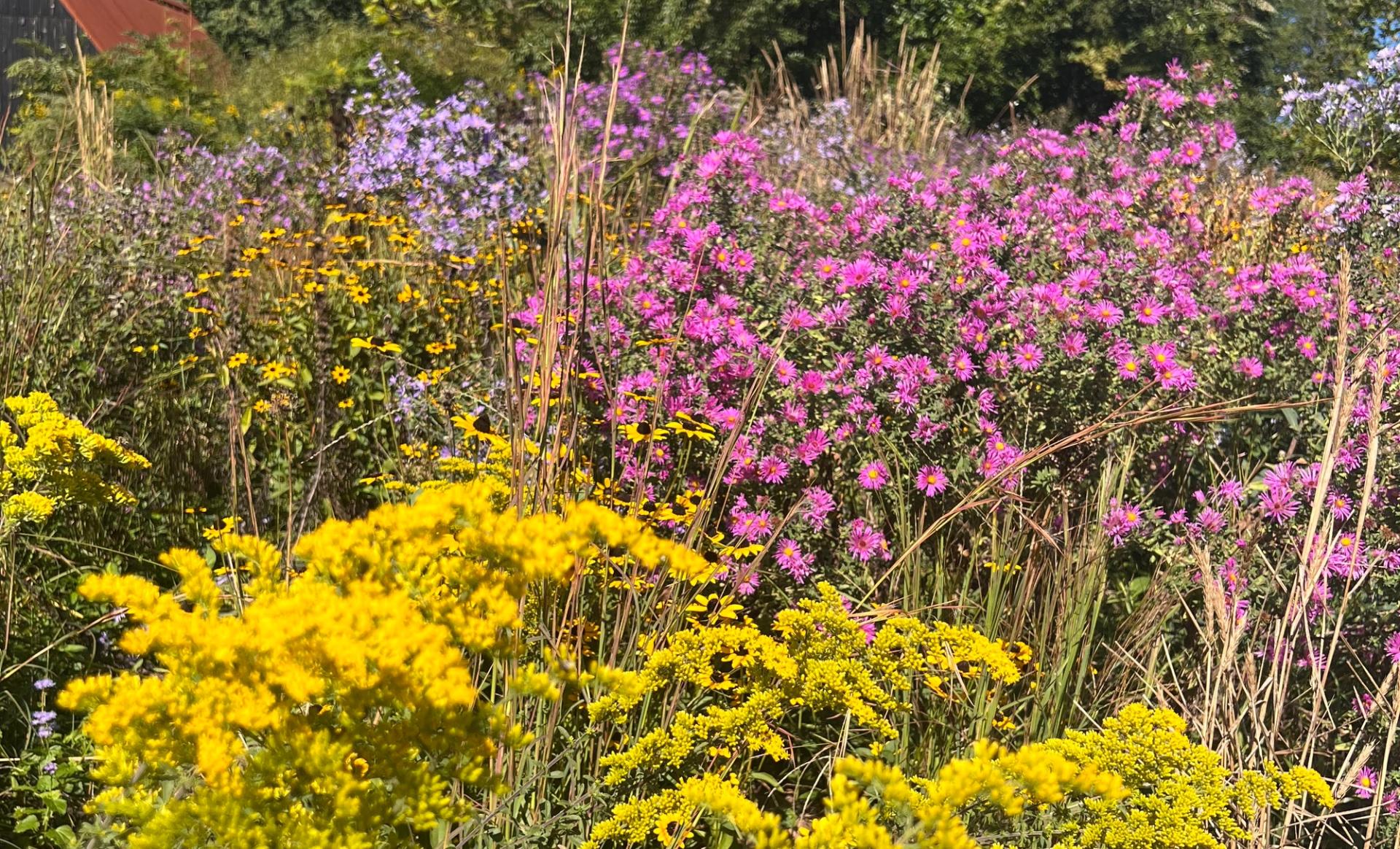
The pink asters and bright yellow goldenrod plants can bring color to your natural space whether you have direct sunlight or not. (John Janick/Good Host Plants)
Shady Growing Space
For growing areas that are a bit darker, asters and goldenrods are good choices. Asters have dainty purple or pink flowers with a yellow center, and goldenrods have lush green foliage with clusters of yellow buds peppering the top of the plants. Both thrive in areas with less sun and can hold their own against pesky weeds.
Edible Gardens
Janick grows five different species of native mountain mint, which attract bugs that can kill common garden pests. A problem with many non-native mint species is they can spread fast and take over entire gardens if not cared for properly. But native mints like slender mountain mint don't aggressively spread, and they taste similar to their non-native counterparts.
Keep up with Good Host Plants on Instagram for upcoming events and native plant offerings.