A confession: One of my favorite (partially) Philadelphia-set movies is the 2004 gem “National Treasure.” And every year when Daylight Saving Time comes around, I think of a specific scene from that movie.
I won’t recap everything the three main characters say about Daylight Saving Time while standing in a Philly clothing store (you can watch it here, if you want). The relevant excerpt: At the end of the exchange, one character asks the other two, “Do you actually know who the first person to suggest Daylight Savings was?” His two friends respond in unison, “Benjamin Franklin.”
Wait … is that true? Is Daylight Saving Time the brainchild of one of history’s most famous Philadelphians?
Well, reasonable folks disagree.
The time-shifting practice was first implemented across the whole United States during World War I — way after Franklin’s time. It ended up being repealed a year after it was enacted, but temporarily returned again during World War II. After that war, clock schedules varied from state to state until 1966, when Congress standardized Daylight Saving Time’s start and end dates nationwide (mostly), leaving us with the system we have today.
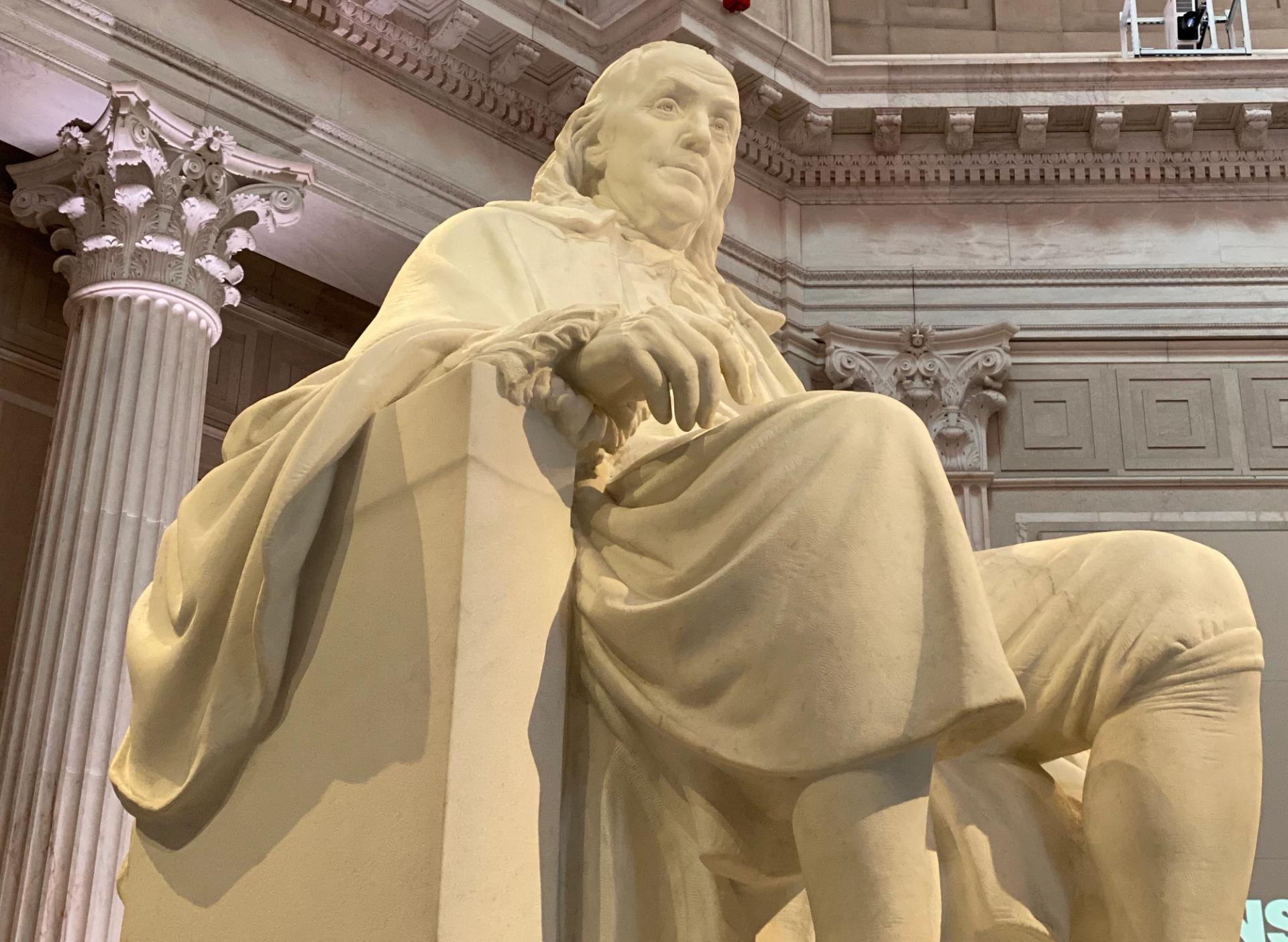
So where does Franklin come in? In 1784, while he was living in France, he studied people’s sleep patterns and penned a humorous essay in the Journal de Paris proposing that Parisians could save money on candlesticks by waking up earlier and aligning their days with when the sun was shining. He never suggested changing the clocks — just sleep schedules.
The person who’s often credited with proposing an actual time shift for the first time is George Vernon Hudson, an amateur entomologist from New Zealand who wrote about the idea in 1895.
Do Franklin’s early musings about waking up earlier actually count as “inventing” Daylight Saving Time? You decide.