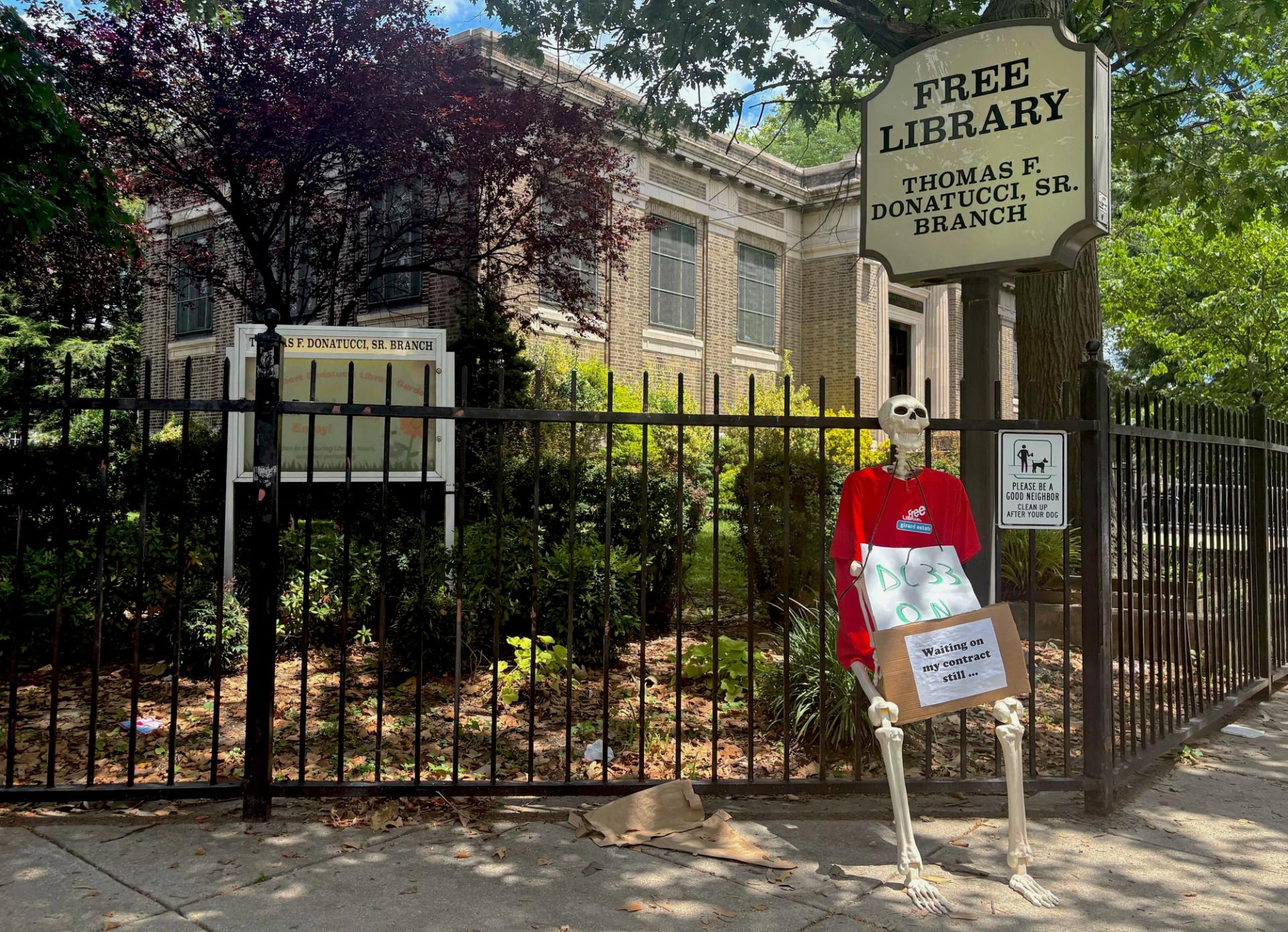
AFSCME District Council 33 members have been on strike since July 1 following the expiration of their contract. As a new deal is negotiated with the city, trash pickup, water-related repairs, libraries, recreation centers, and more have been disrupted because nearly 9,000 blue-collar municipal workers are off the job and on the picket line.
Since then, bags of trash – or “Parker Piles,” as some residents are now dubbing them – have piled up on city streets and outside playgrounds, with dumping becoming rampant. Nearly all library branches are closed. Two headliners dropped out of the Wawa Welcome America July 4th Concert in solidarity with striking workers. A driver struck two sanitation workers on the picket line. Philadelphia Gas Works equipment was vandalized because a worker was not striking, despite the fact that PGW employees are not even on strike. While the city pays overtime to supervisors who are now filling in, striking workers say they don’t earn a living wage.
So how did we get to this point?
Here’s a preview of City Cast Philly executive producer Matt Katz’s conversation with Philadelphia Council AFL-CIO President Danny Bauder, who lays out the events that led to the strike and how striking workers hope residents support them during the work stoppage.
Part of the AFL-CIO messaging has been that one thing that Philadelphians should not be doing in order to support the strike is to not use the city dumping sites. Philadelphians who throw out their own trash – are we “scabs for” doing so?
“ The short answer is no. If you're taking your trash to one of the sites, you are not individually a scab, but unfortunately what you may be participating in unknowingly is scabbing because sanitation workers are on strike. They're not processing waste and recycling that comes into the sanitation sites. People who are not members of District Council 33 are doing that work. And so there are people who are actively scabbing the jobs of union members who are under a collective bargaining agreement. And so that is something that is behavior that we discourage.”
What should Philadelphians who are in support of sanitation workers (and these thousands of other workers) making a living wage and being able to afford to live in the city – what could they be doing to support this strike?
“...The best things that you can do to support them and to show them that you support them would be visit a local picket line if you can. Bring something for them: Food, water or ice … go and visit them or just join 'em on the picket line if you don't have anything you can bring with you.
“Maybe you just happen to spot them while you're driving from A to B. Take a minute, join the picket line, introduce yourself, let 'em know that you're a neighbor and that you support them and that you want to act in solidarity with these workers, and that'll go a long way."
What else was tried by the union to avoid this work stoppage? Were there, are there, other actions that were taken or considered?
“Last October, District Council 33 was in bargaining with the city for what became that one-year contract. At the time, Greg Boulware, the president of District Council 33 was … trying to bargain a three- or a four-year contract, which is more akin to what the municipal unions typically have. At that time 33 took a strike vote in October of 2024. And I was there when they did it. And it was overwhelmingly in favor of going on strike at that time nine months ago.
“…And then on Monday, June 30th, a week ago, they had another rally/press conference in the City Hall courtyard with the rain pouring outside with hundreds of members, if not thousands, standing outside of the courtyard. And once again said, ‘You know, if we don't reach a deal for a fair contract, we're gonna go on strike at midnight.’
“And so, for anyone observing this, the administration, other unions, anyone...you hear that and see that and you say, ‘Well, you know, that's their rhetoric. They're rallying the troops, they're appealing to their base, they are circling the wagons,’ whatever your metaphor may be. But you have to know at some point, if they take the vote and they say – ‘Here's the deadline, when we get to it, we're gonna go on strike’ – you gotta take 'em kind of at face value and say, ‘Well, there is a chance that they really are gonna follow through with this.’ And in this case, 33 did follow through with it.”
To learn more about the negotiations and stalemate, listen to Matt’s full conversation with Danny on City Cast Philly.