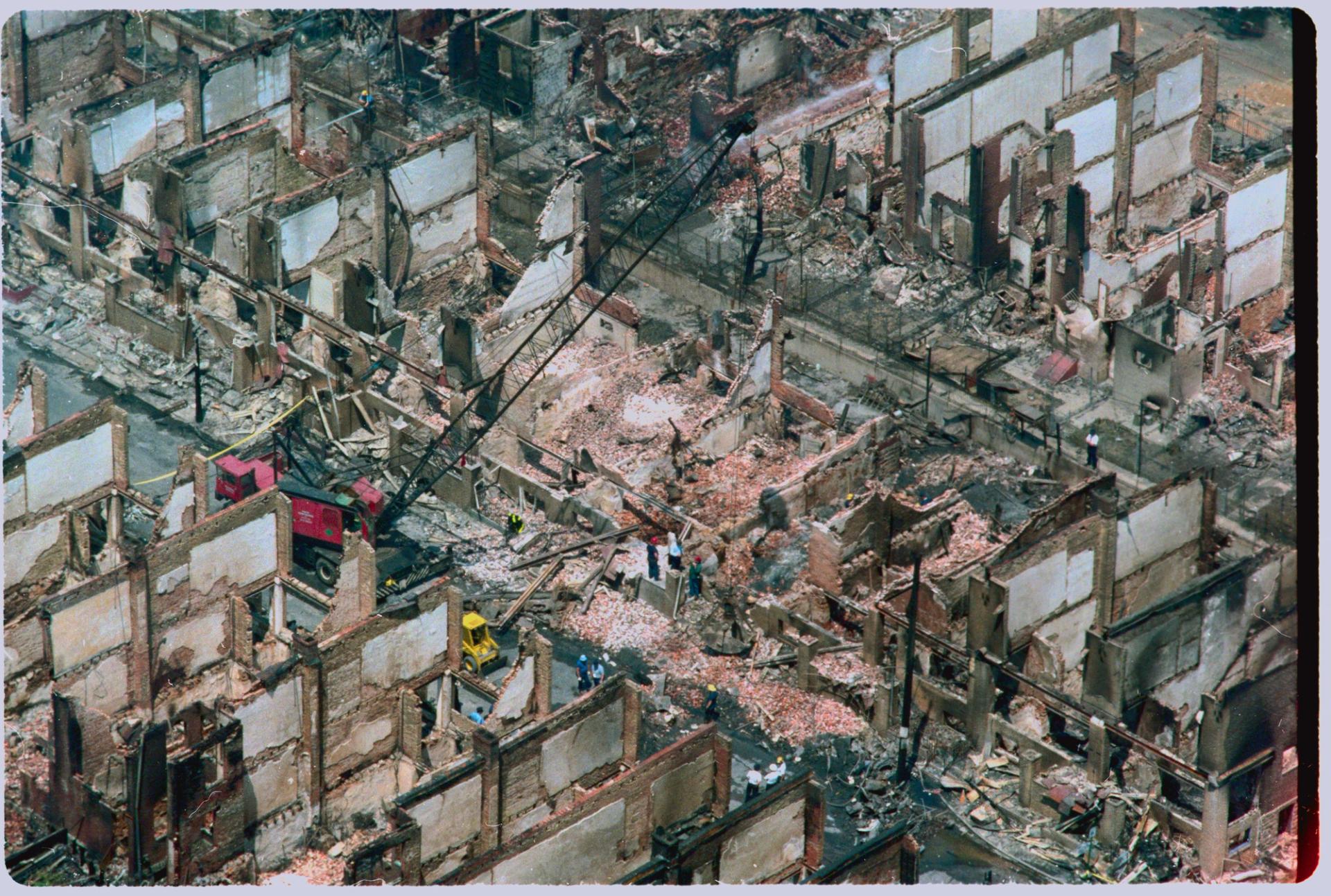
Philadelphia was changed forever when police dropped a bomb on the MOVE home in West Philadelphia on May 13, 1985. What led to this?
1972
West Philadelphia resident Vincent Leaphart, now known as John Africa, compiles his back-to-nature ideologies into a book. "The Guidelines" work as the founding principles for his group, The Christian Movement for Life, which would later become known as MOVE. The group’s anti-establishment and anti-technology beliefs include a right to self-defense and a diet of raw food.
1974
MOVE acquires a home in Powelton Village as its base of operations. The group stages protests against things they consider against the natural laws of life – from pet stores to the Philadelphia Zoo. The activity causes tension with neighbors who may support some of the ethos but have issues with MOVE’s trash, pests, and profanity-laced demonstrations. Philadelphia Police begin to clash with MOVE.
1976
Amid a confrontation between Philadelphia Police and MOVE, members claim a baby was killed. Because there is no birth certificate documenting the child, the city counters that the child did not exist and demands the body to conduct an autopsy. The death of Life Africa further radicalizes the group.
1978
After months of refusing to relocate, Mayor Frank Rizzo obtains a court order to enact a starvation blockade, in which the city blocks utilities like water service. Philadelphia Police and MOVE then engage in a shootout on August 8. An officer is killed and nine members, later known as the MOVE Nine, are sentenced to as many as 100 years in prison. Demanding the release of these individuals would become the main focus for MOVE.
1982
MOVE relocates to 6221 Osage Avenue after years of tension at its home on North 33rd Street.
1985
On May 13, 1985, Philadelphia Police direct neighbors to leave their homes for the day so MOVE could be evicted. Police shoot into the rowhome, with 10,000 bullets fired in the span of 90 minutes. When that fails to lure the group out, Philadelphia Police drop a bomb on Osage Avenue home and firefighters do not initially put out the fire, letting it spread across the neighborhood. Eleven people, including five children, are killed, and over 60 homes were destroyed. Only two people survive.
A little over a week after the bombing, Mayor W. Wilson Goode appoints an independent commission to investigate the events leading up to the tragedy. The Philadelphia Special Investigation Commission collects evidence and interviews to present in televised public hearings over the course of five weeks.
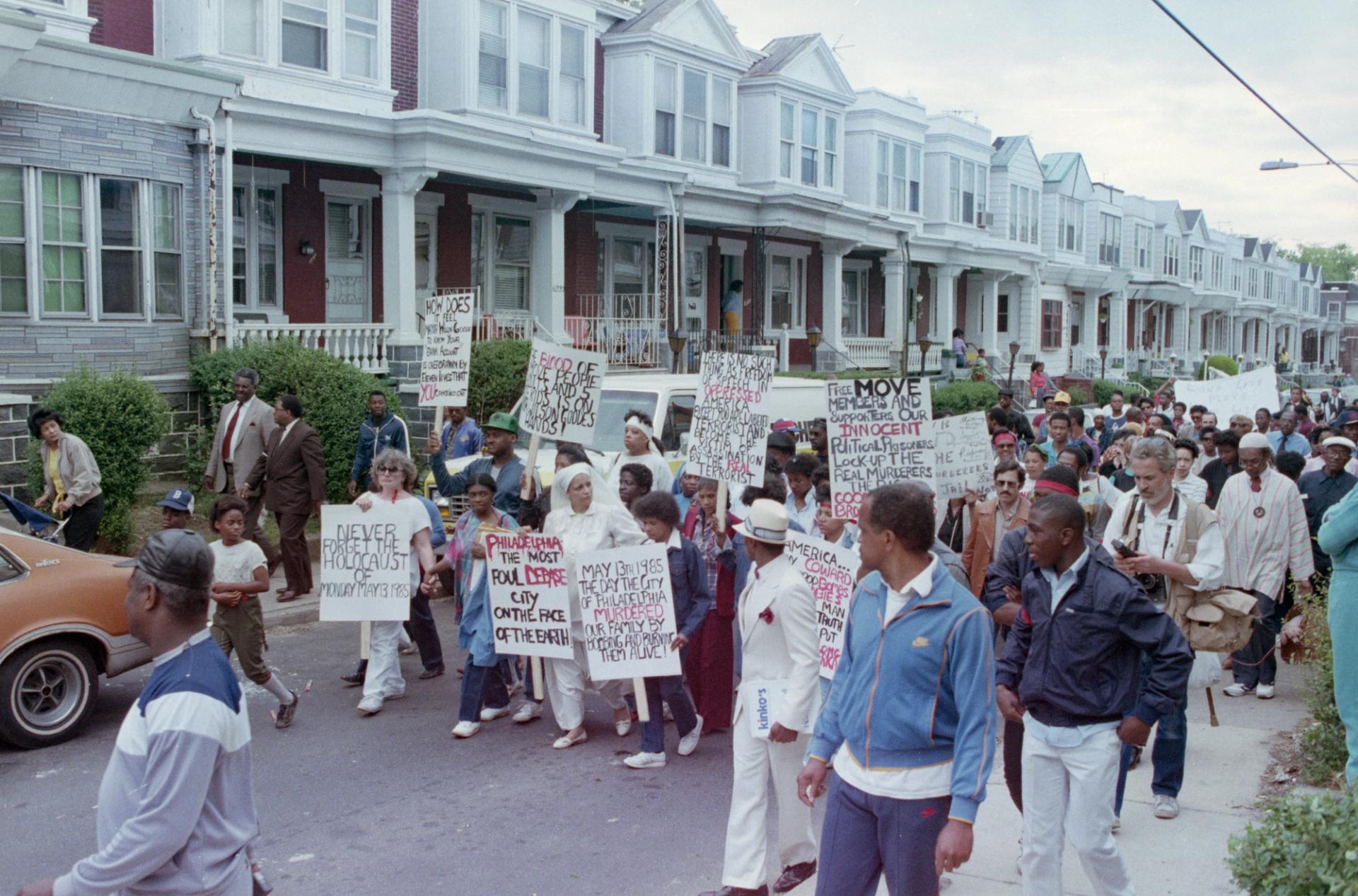
Relatives and supporters of MOVE march on the streets of West Philadelphia commemorating the first anniversary of the 1985 bombing on Osage Avenue. (Bettman / Getty Images)
1988
Following a two-year long investigation, a grand jury acquits Mayor Goode and his top aides of criminal intent in the bombing. The jury calls the event “an epic of governmental incompetence."
2020
Philadelphia City Council issues a formal apology on behalf of the city, acknowledging the events that led to the 1985 tragedy.
The last of the MOVE Nine, Delbert Africa, is released from prison.
2021
In April 2021, news comes to light through an op-ed in The Philadelphia Inquirer that Penn Museum had previously been in possession of the remains of a victim. And it's later discovered that the medical examiner’s office was still in possession of some of the victims’ remains. The city health commissioner, Thomas Farley, ordered the remains to be cremated and disposed of, rather than returned to family in 2017. Farley resigns in May 2021 and it's later learned the remains were not cremated.
2023
Mike Africa Jr., son of MOVE 9 Mike and Debbie Africa, purchases the rebuilt home on 6221 Osage Avenue to be used as a memorial.
2024
Additional remains of a child victim are found at the Penn Museum.
2025
Penn settles a lawsuit over the handling of Katricia Dotson’s remains.
Philadelphia City Council declares May 13 as a day of remembrance, acknowledging the tragedy that occurred 40 years prior.