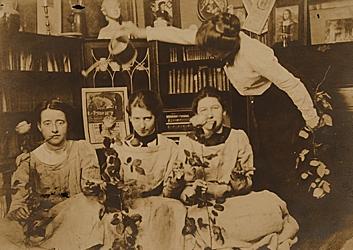
At the turn of the 20th century, Philadelphia was filled with talented women working in the visual arts.
But, they didn’t have a space to gather or an organized way to promote their work, since local artist clubs at the time only allowed men to join. So, in 1897, led by portraitist and art educator Emily Sartain, a group of women artists banded together to found their own organization.
They called it “The Plastic Club,” drawing their namesake from the meaning of the term “plastic” at the time: art made from malleable materials. Founding members of the club included (but weren’t limited to) painter Cecilia Beaux, impressionist Fern Coppedge, illustrator Elizabeth Shippen Green, muralist Violet Oakley, and illustrator Francis Tipton Hunter.
The women hosted art exhibitions and classes in a rented room near Rittenhouse Square for several years. After a big fundraising effort, the group moved into a space at 247 S. Camac St. — located in the present-day Gayborhood — in 1909, and has been operating out of that building ever since.
During the first half of the 20th century, the group became known for organizing exhibitions with work from world-famous artists like Henri Matisse, hosting lectures and “current event” classes, putting on an annual quirky social event called “The Rabbit,” and doing charity work during both World Wars.
In 1991, the Plastic Club opened up its membership to all genders. Nowadays, the nonprofit organization has over 250 members, and it continues to host exhibitions and offer weekly workshops (to both members and the public) for $10 and under. A historical marker outside the Camac Street building commemorates the group’s history.
🎧 Want to hear about one of the club’s prominent founding members? Tune into this City Cast Philly podcast episode to learn about Violet Oakley, a prolific muralist who broke through glass ceilings in the art world.