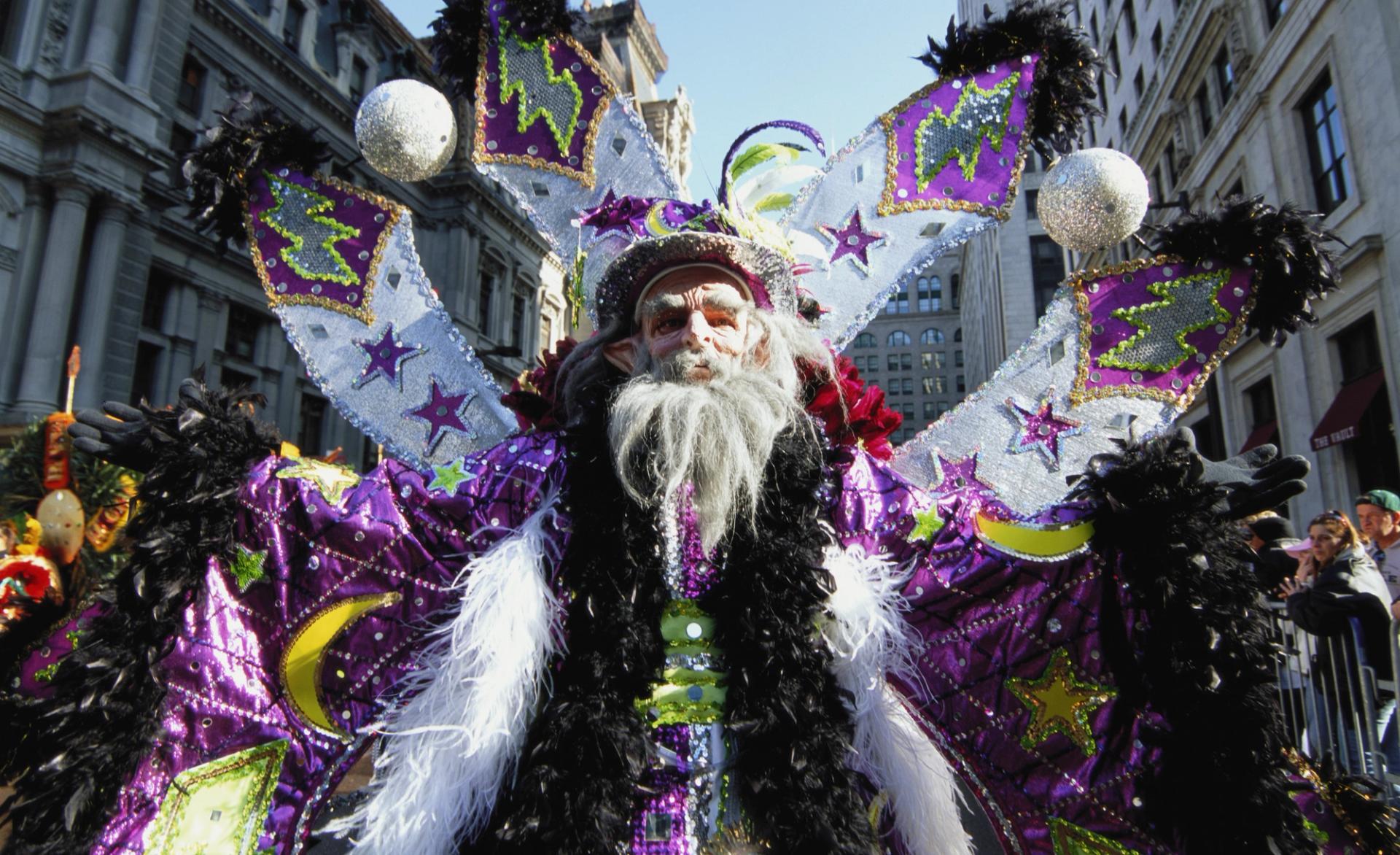
Philly natives and transplants alike know that the Mummers Parade embodies New Year's Day in the city. And of course we’re very familiar with the Mummers costume adorned by Jason Kelce during his famous “Underdogs” speech after our last Super Bowl win. But how much do you know about the origins of the Mummer?
What Is a Mummer?
A mummer is “a person who wears a mask or fantastic costume while merrymaking or taking part in a pantomime, especially at Christmas and other festive seasons,” according to Dictionary.com. You’ll see people in colorful, eccentric costumes like the Philadelphia Mummer pictured above.
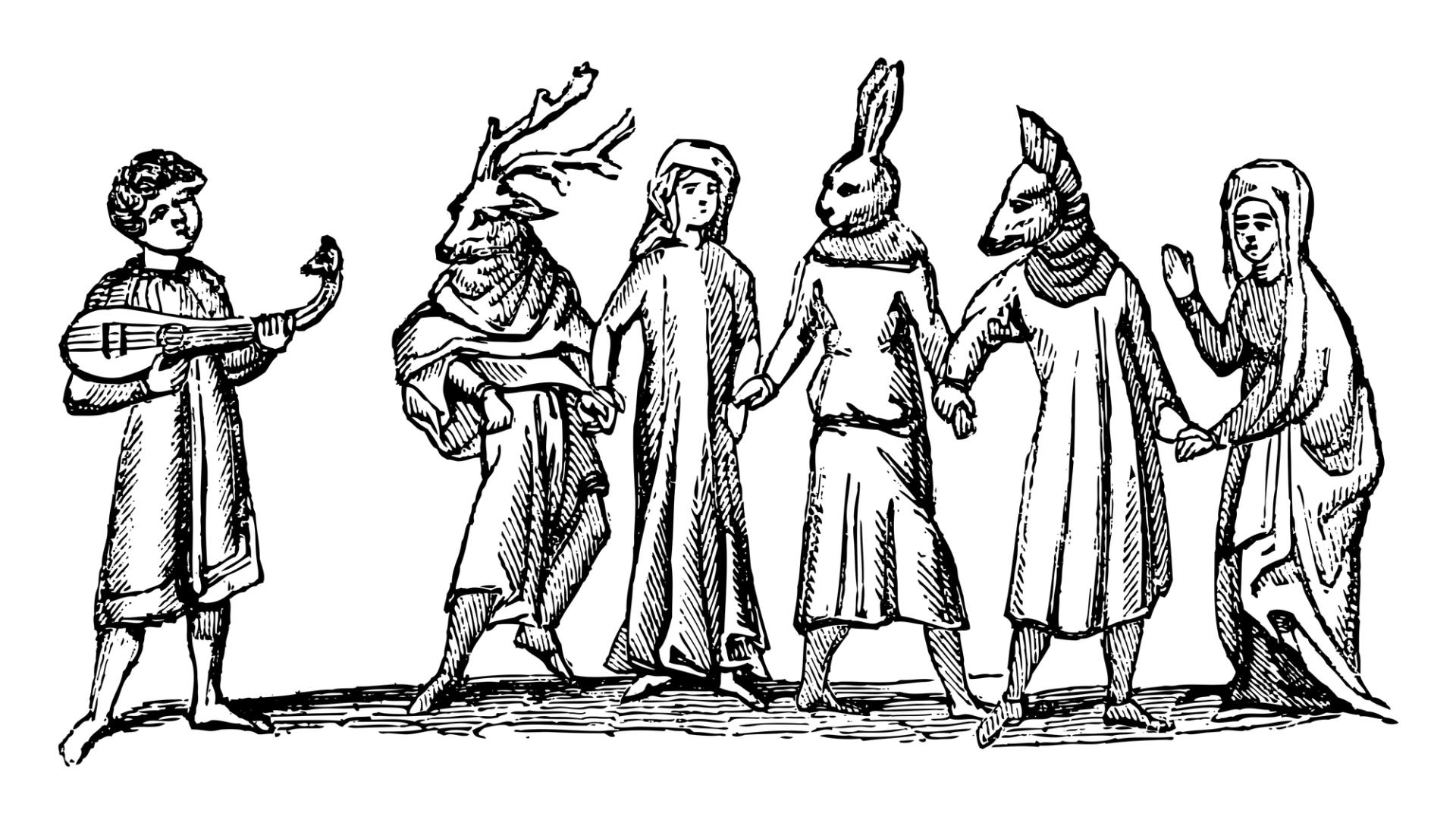
Mummers have been around for over 600 years. (Hein Nouwens / Getty Images)
What’s the History of the Mummers?
The Mummers have a long history in Philly, but the idea began centuries earlier in Egypt and parts of Europe, according to Philadelphia’s Mummers Museum. The word is said to come from Momus, the mythological Greek god of merrymaking and mockery. Scandinavians are credited with bringing the Mummers tradition to Philadelphia. The Swedish population mixed their New Year's traditions with elements of the Mumming Play, which is a folk drama based on the story of St. George. This play is full of colorful costumes, dance, and music.
What’s the History of the Parade in Philly?
When George Washington was president and Philadelphia was the nation’s temporary capital, the New Year’s Day celebration involved people traveling from house to house sharing poems, jokes, and impersonations of Washington. For decades in the 1800s, there were restrictions around mummery and masquerade halls. But you can’t keep a good Mummer down, and in 1901 the city officially adopted the Mummers Parade, making it the longest-running folk parade in the United States.
The Mummers Parade Today
The tradition still holds strong, and this year’s parade was no exception. Broad Street (and later in the night, Two Street) was flooded with Mummers decked out as zombies, Phillie Phanatics, and drones, continuing a tradition of bright colors, boisterousness, and booze that’s older than any Philadelphian.