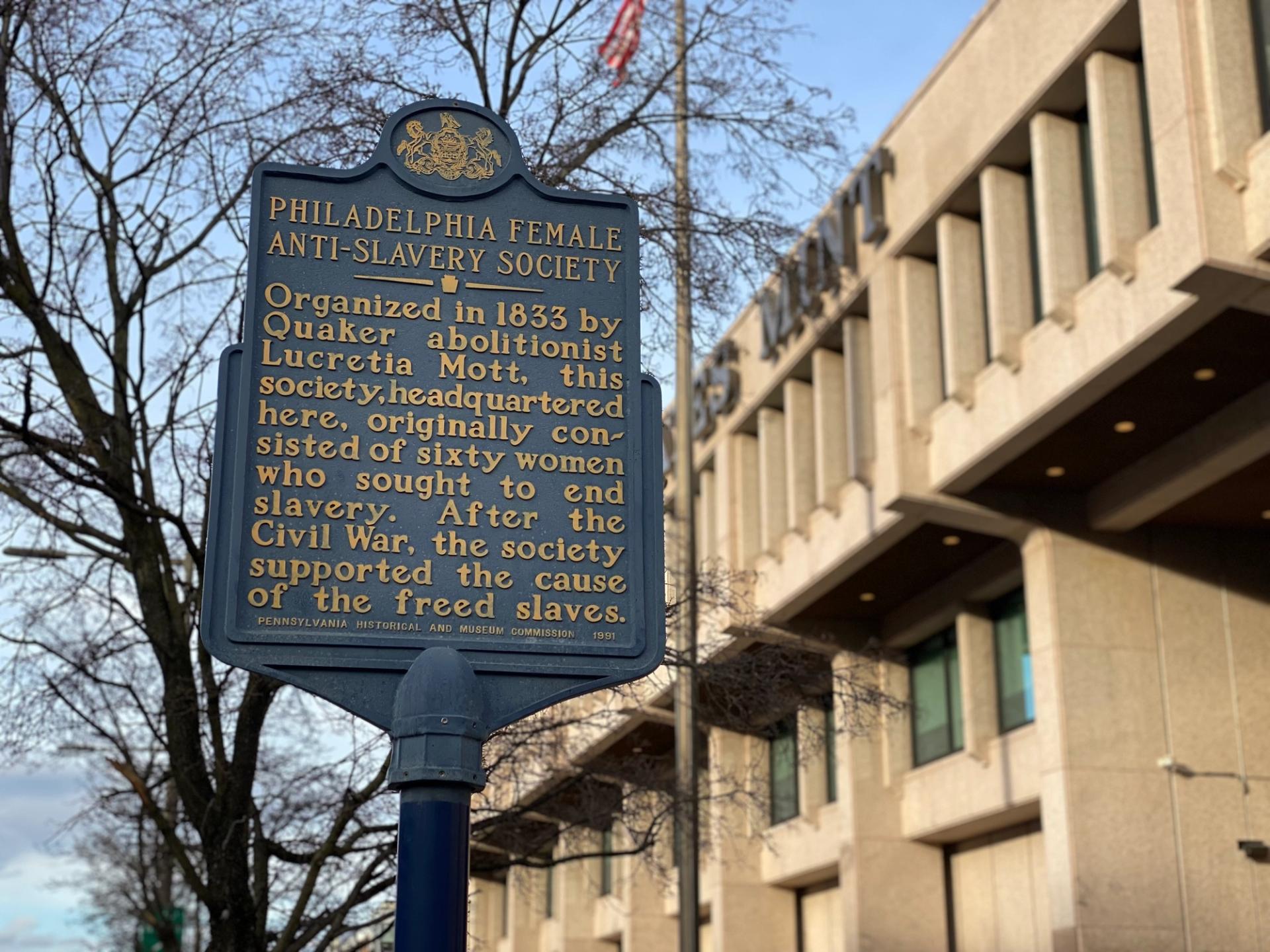
Did you know that where the U.S. Mint stands today in Old City was once the headquarters of one of the country’s foremost antebellum abolition groups?
An interracial group of women — including the famous feminist and abolitionist Lucretia Mott, four members of the Forten family, and dozens of others — created the Philadelphia Female Anti-Slavery Society in 1833. They formed it less than a week after the American Anti-Slavery Society — a male-run abolitionist group that did not admit women — came to be.
The society (we’ll call it PFASS for short) advocated for the abolition of slavery and organized boycotts of products made by enslaved people. They also raised money for the Pennsylvania Abolition Society and were involved with the Underground Railroad.
In 1838, the group hosted the national Anti-Slavery Convention of American Women at Pennsylvania Hall, a newly-built center in Philly meant to host dialogue among reformers. But the hall was surrounded by a mob that was angry that the event was gender- and racially-inclusive. Rioters threw stones at the windows and eventually burned the building down.
The violence and arson they encountered didn’t deter the movement, though — the women resolved to continue advocating for the abolitionist cause. PFASS even took on hosting the same convention once again in 1839, just at a different venue. And they continued their advocacy work for decades, even several years after the Civil War.
The group disbanded after the 15th Amendment to the U.S. Constitution, which guaranteed the right to vote to African American men, was ratified in 1870. Today, some members of PFASS are commemorated on a mural in Fairhill honoring civil rights heroes.
Check back next Tuesday for another women’s herstory spotlight. Expect one in your inbox weekly this March — and tune into the City Cast Philly podcast every Tuesday this month for even more women’s history trivia, courtesy of yours truly. 🩷