
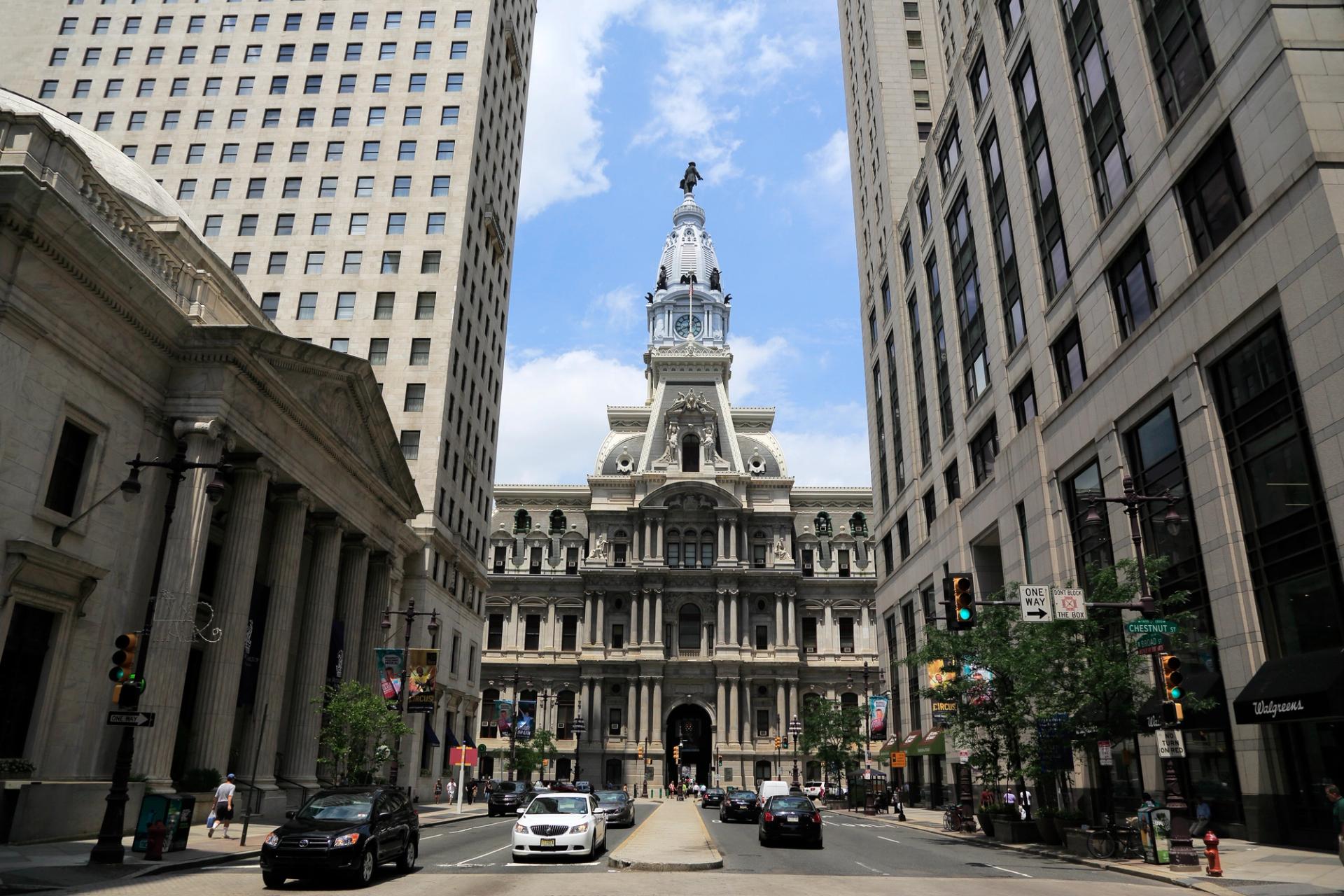
Philadelphia’s City Hall is our city’s iconic heart, looming over Broad Street in both directions as an awe-inspiring backdrop for photo shoots for wedding photographers and video montages for TV producers during Eagles games. You can walk through it without going inside, you can take a tour all the way to the top, and you can do jury duty in one of its courtrooms. Or you can watch it on the big screen, from “Transformers: Revenge of the Fallen” to one of my all-time favorites, “National Treasure.” So why was it so hated for so many decades?
Construction of the brick-and-marble City Hall began in 1872 and was completed in 1901. At the time, it was the largest masonry load-bearing building in the world. The style of the building is known as the “second-empire mode of French Renaissance revival” and was designed by John McArthur, Jr.
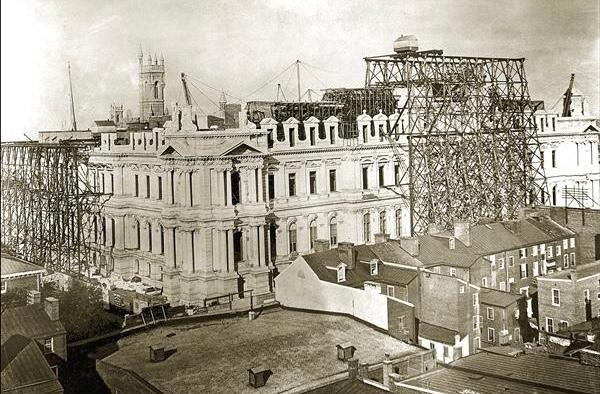
This photo was taken in 1881 and shows the construction of City Hall. (City of Philadelphia)
But Philadelphians apparently despised the look of the building. Given its grandiosity, it was considered already out of fashion while still under construction. Essayist Agnes Repplier described City Hall as possessing “an almost squalid paltriness." In her book “Philadelphia, the Place and the People," she goes on to say that on “every side the decorations are either mediocre or painfully grotesque; and in murky corridors that look as if they ought to lead to prisons…”
By the 1950s, city government considered demolishing the building, but balked when the estimated cost came close to new construction. City Hall was added to the National Register of Historic Places in 1976, making it one of the 150 most important buildings in the U.S.
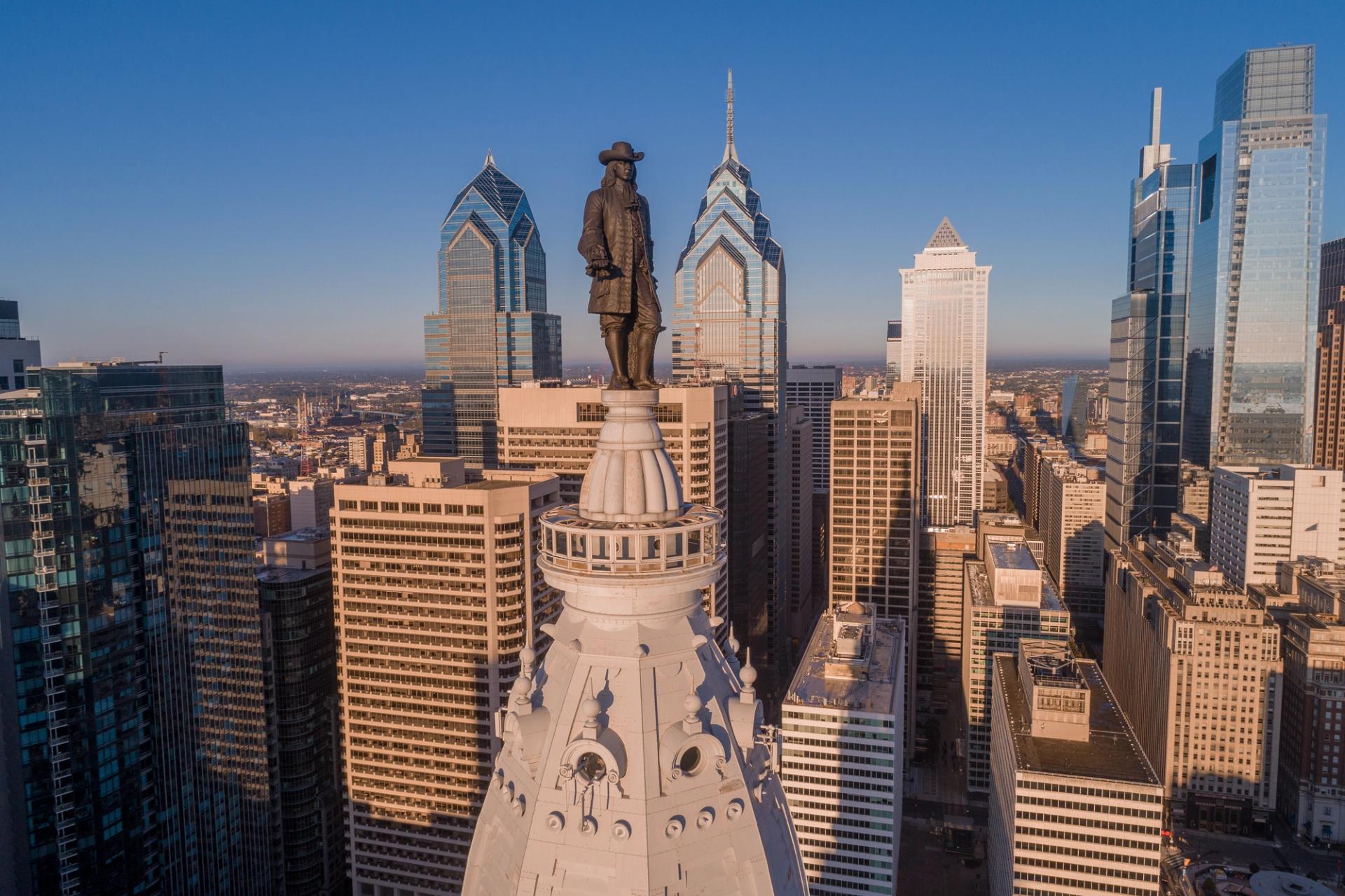
Alexander Milne Calder created the statue of William Penn. (Getty Images / Mindaugas Dulinskas)
And let’s not forget the statue of Willam Penn on the very tippy-top of the building. Coming in at 37 feet tall and about 53,000 pounds, it’s the tallest statue on a building in the world. Until Liberty Place went up in 1987, an unofficial city rule forbade buildings to be constructed if they stretched higher than the top of Penn’s hat. The sculpture was cast in 1888 at Tacony Iron Works and requires routine restoration to remove corrosion and coat it with a protective wax.
So what do you think? Is this historic building something we should brag about, or is it still “painfully grotesque”?