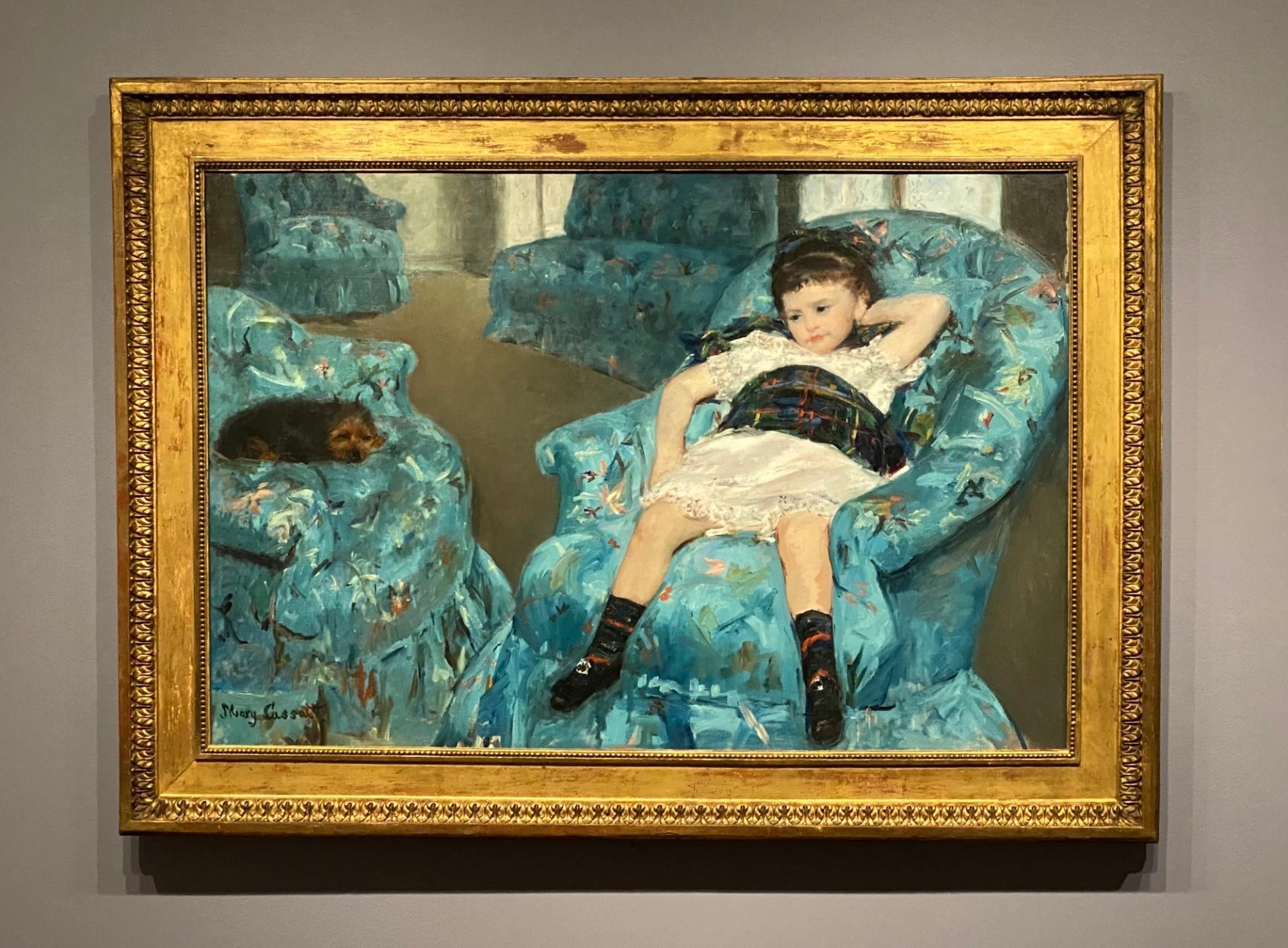
Nineteenth-century painter Mary Cassatt is perhaps best known for being the only American to exhibit with the French Impressionists. She lived most of her life across the Atlantic, but she had some roots right here in Philadelphia.
Born in 1844 on the other side of the commonwealth to a wealthy family, Cassatt spent much of her childhood moving from place to place, including some years spent in Europe.
But her family eventually moved back to Pennsylvania, where she pursued her ambitions of becoming a working artist by enrolling at the Pennsylvania Academy of the Fine Arts in Philly as a teenager. During her time at PAFA between 1860 and 1864, she and other female students weren’t allowed to draw live models. But that didn’t stop them from setting up their own sessions, where they posed for each other to practice figure drawing.
Cassatt left the United States in her early 20s to study in Europe. She eventually settled in Paris, where she exhibited with the Impressionists, became known for her evocative depictions of women and children, took up printmaking, and influenced American art collectors to purchase Impressionist art and bring it back to the States.
Even as she pursued her career in Europe, Cassatt still had family back in Philly, according to Jennifer Thompson, one of the curators of the Philadelphia Museum of Art’s new exhibition “Mary Cassatt at Work.” Cassatt’s brother Alexander lived in Philly and ran the Pennsylvania Railroad, while her other brother, Gardner, was an investment broker here.
Cassatt wasn’t a super frequent visitor, though, and only returned a handful of times.
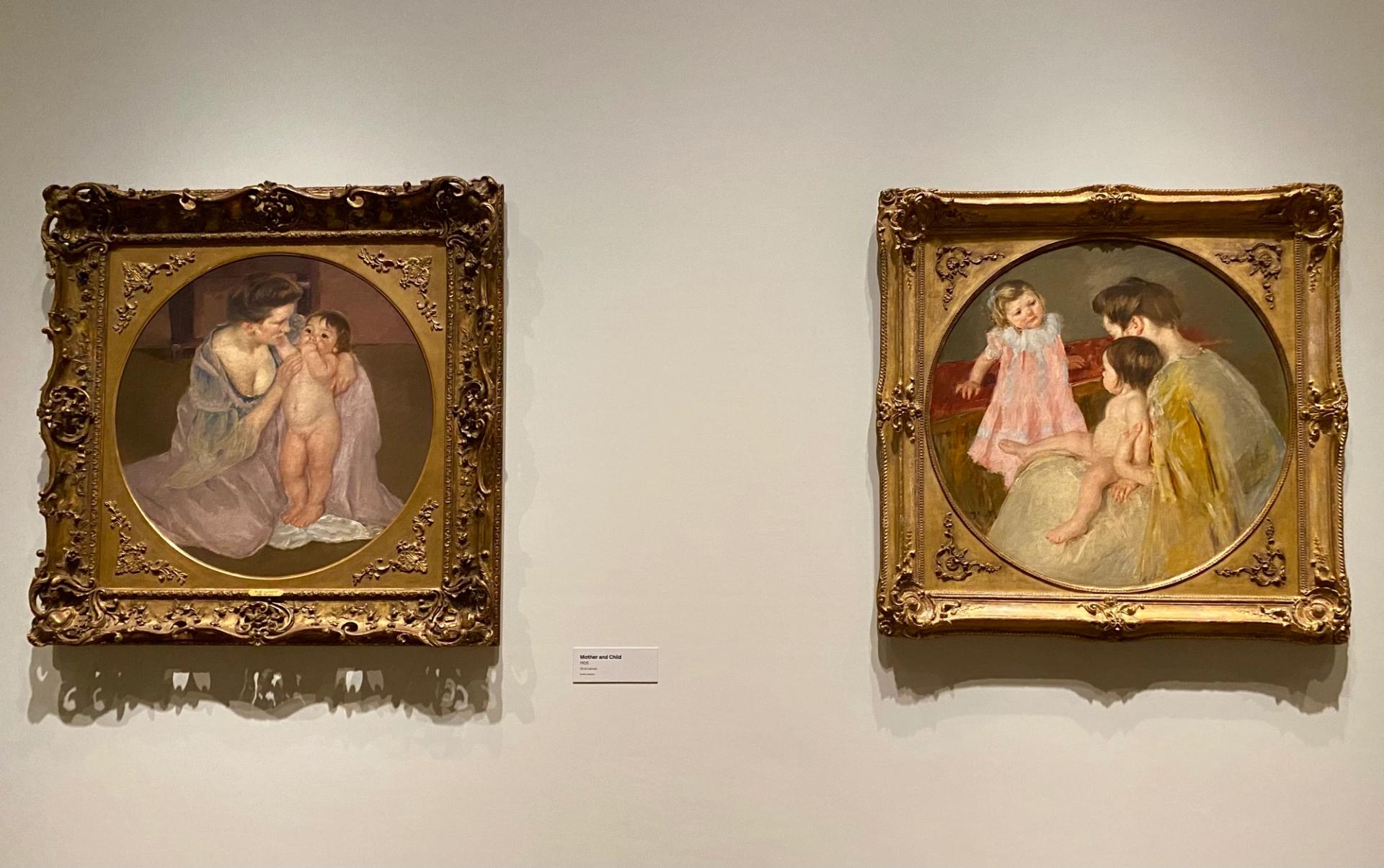
In the early 20th century, Cassatt originally created these paintings — called “Mother and Child” and “Mother and Two Children” — as part of a commission to adorn the ceiling of the Pennsylvania State Capitol building in Harrisburg. But she ended up withdrawing from the commission, likely because she heard of corruption involved with the Capitol building. They’re now on display in the “Mary Cassatt at Work” exhibition. (Asha Prihar/City Cast Philly)
“She loved the life in Paris,” Thompson explained. “It was a place where she got professional recognition more so than she would have as a woman artist here.”
Cassatt also suffered from seasickness that limited her travels. “After a week on a boat, she would arrive and sometimes would be so weak that it would take her a week to recover,” Thompson said.
All in all, Cassatt, who lived to be 82 years old, spent only “about seven years total” in Philly, per Thompson. Those years, however, were “pivotal.”
“She was American, maintained an American passport her entire life,” Thompson said, “and would have identified most closely with Philadelphia.”
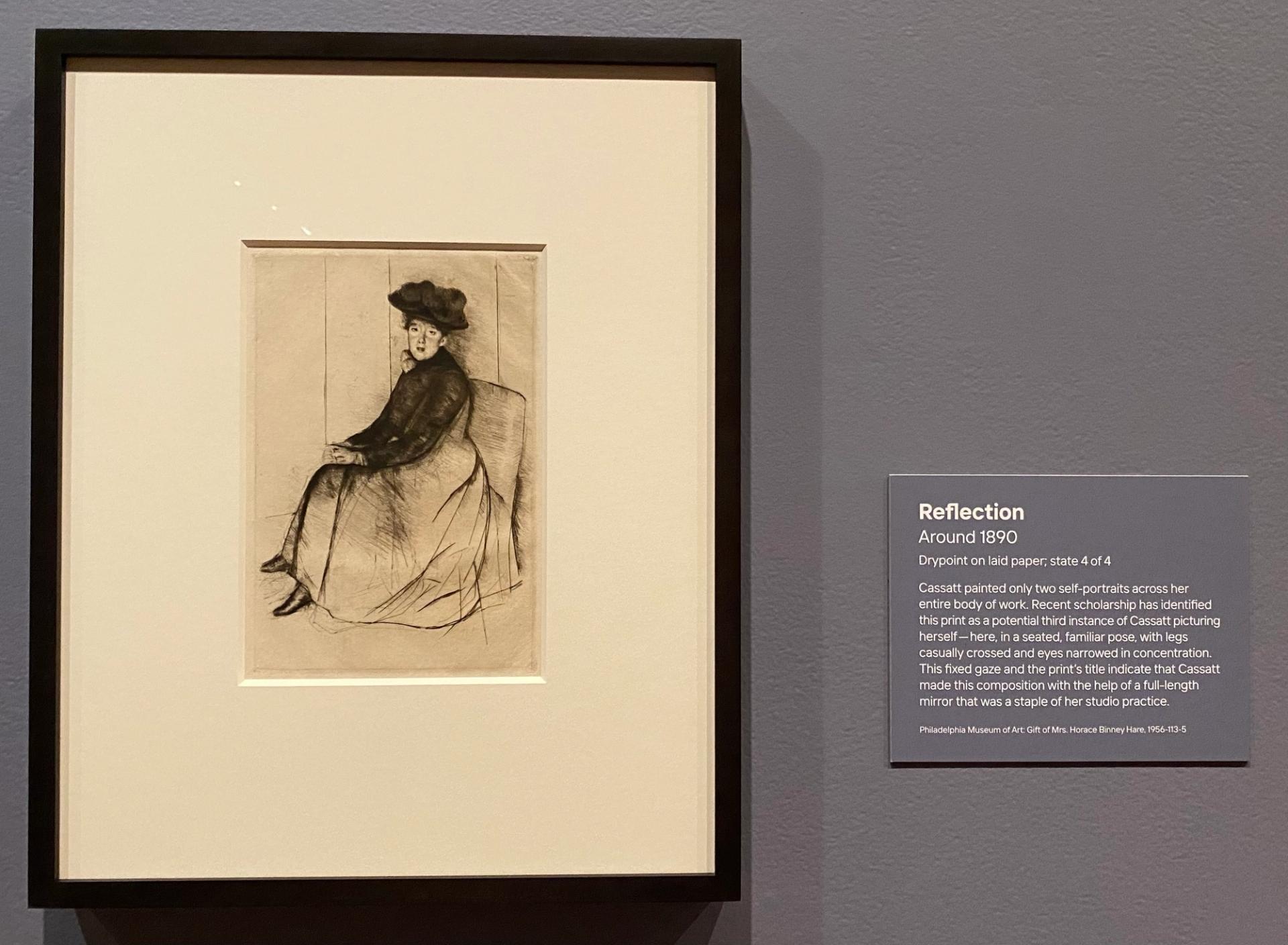
“Reflection,” a possible self-portrait by Mary Cassatt, displayed in the Philadelphia Museum of Art’s “Mary Cassatt at Work” exhibition. (Asha Prihar/City Cast Philly)
🖼️ Want to learn more about Cassatt and her work? “Mary Cassatt at Work” is on view at the Philadelphia Museum of Art through Sept. 8. (Don’t expect to see work she created while living and studying here in Philly, though — Cassatt destroyed much of her work from the early period of her career, according to Thompson.)