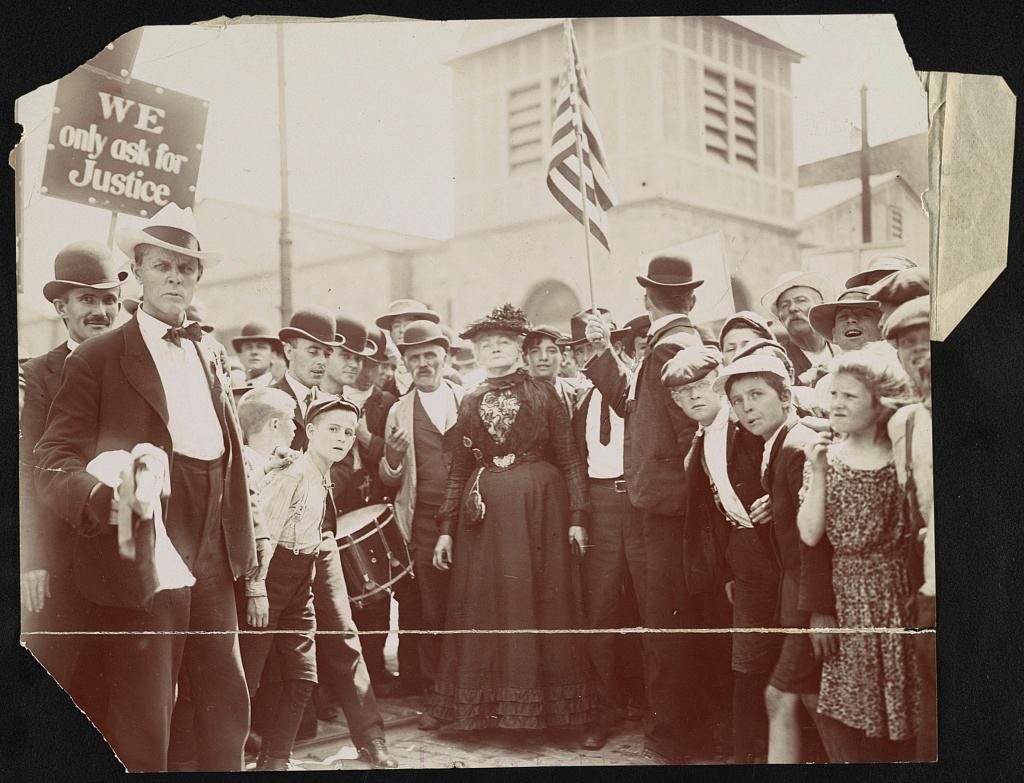
121 years ago, the famous labor activist Mary Harris “Mother” Jones led a three-week, nearly 100-mile march of striking workers — including children — across the Eastern Seaboard … and it all began in Philadelphia.
At the time, around 1.75 million children between the ages of 10 and 15 were employed across the country, and Pennsylvania alone had over 120,000 reported child workers — the most of any state in the country, according to the Swarthmore Global Nonviolent Action Database. Children in coal mines, factories, and other jobs worked long hours with few breaks.
Jones made her way to Kensington in 1903, when tens of thousands of textile workers — many of whom were young children — were engaged in Philly’s largest-ever strike at the time, according to the Encyclopedia of Greater Philadelphia. The mill laborers were rallying for a 55-hour work week and an end to night work for women and children workers.
Jones wondered why child labor wasn’t being thoroughly covered in the Pennsylvania press, and when she was told that it was because mill owners held a financial stake in newspapers, she decided to drum up some publicity for the issue that no one could ignore.
In Kensington, she rallied an “army” of several hundred strikers and set off on a march through Pennsylvania and New Jersey to New York City to solicit donations for the workers, stage a series of rallies, and generally bring attention to the horrors of child labor.
Once they got to New York, Jones announced that she and three child workers from Kensington would be marching all the way to then-President Theodore Roosevelt’s summer home on Long Island to demand an audience with him, per the Nonviolent Action Database. His secretary turned them away since they didn’t have an appointment, instead telling Jones to write a letter.
Roosevelt’s ultimate response to Jones’ letter signaled a lack of willingness to handle the matter on a national level — and, meanwhile, the Kensington strikers had begun returning to work before the march ended, according to the Encyclopedia of Greater Philadelphia.
Nevertheless, the “March of the Mill Children,” as it’s called, is credited with drawing the public’s attention to the many problems with child labor and helping further the movement against it.