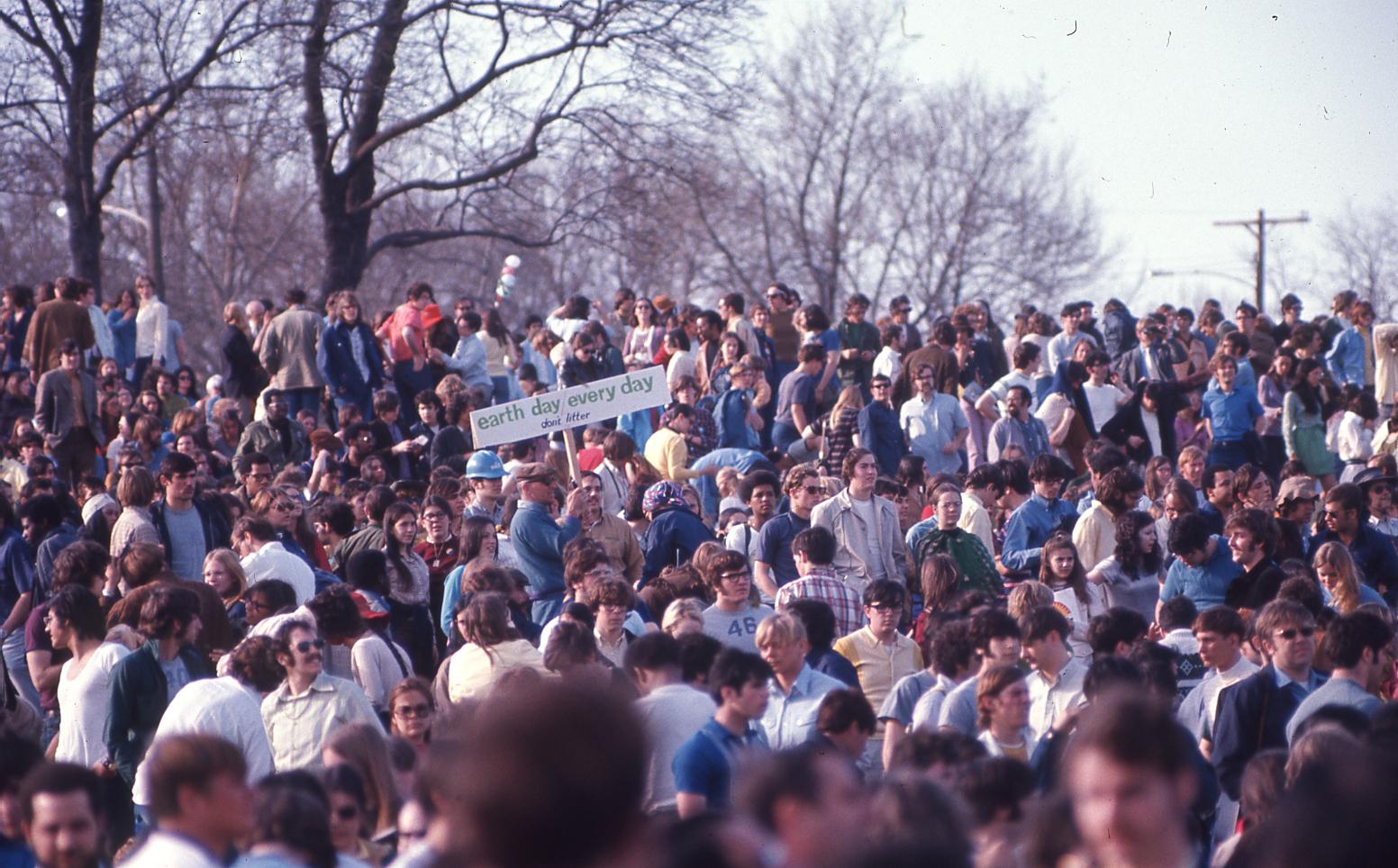
On April 22, 1970, about 30,000 people packed the grounds of Belmont Plateau in Fairmount Park. They came not for the world’s largest picnic – but for the United States’ first-ever Earth Day celebration.
The concept of Earth Day was the brainchild of U.S. Senator Gaylord Nelson. Known for his conservation work in his home state of Wisconsin, he wanted to send a message to the nation’s capital to prioritize the environment. Nelson had the idea of promoting this message through a national teach-in. Instead of attending classes, college students across the country participated in educational gatherings about the environment that channeled the spirit of anti-Vietnam War protests.
The Earth Week Committee of Philadelphia, made up of four students at the University of Pennsylvania, wanted to bring Earth Day to Philly. But to make the event work, they also needed some monetary support.
Thacher Longstreth, then-president of the Greater Philadelphia Chamber of Commerce, was at first skeptical of the idea. But after reading Rachel Carson’s “Silent Spring” and meeting with the young organizers, he appealed to others in the business community who were doubtful that environmental issues would impact them.
With the support of local industries and college organizations, one of Philly’s Earth Day organizers, Edward Furia, decided the celebration should not be just held on one day but turned into a week-long event.
On April 21, environmentalists rallied at Independence Hall and heard speeches from leaders including U.S. Senator Edmund Muskie of Maine, who would introduce the Clean Air Act of 1971 and later work on the Clean Water Act of 1972. The cast of Broadway musical “Hair,” singer Sally Eaton, and rock band Redbone performed for the energized crowd.
On Earth Day itself, thousands marched from the Philadelphia Museum of Art to the event’s main site in Fairmount Park, where musicians took the stage to sing about air pollution and dreams of a greener future. Scientists, poets, and politicians all spoke at the outdoor teach-in.
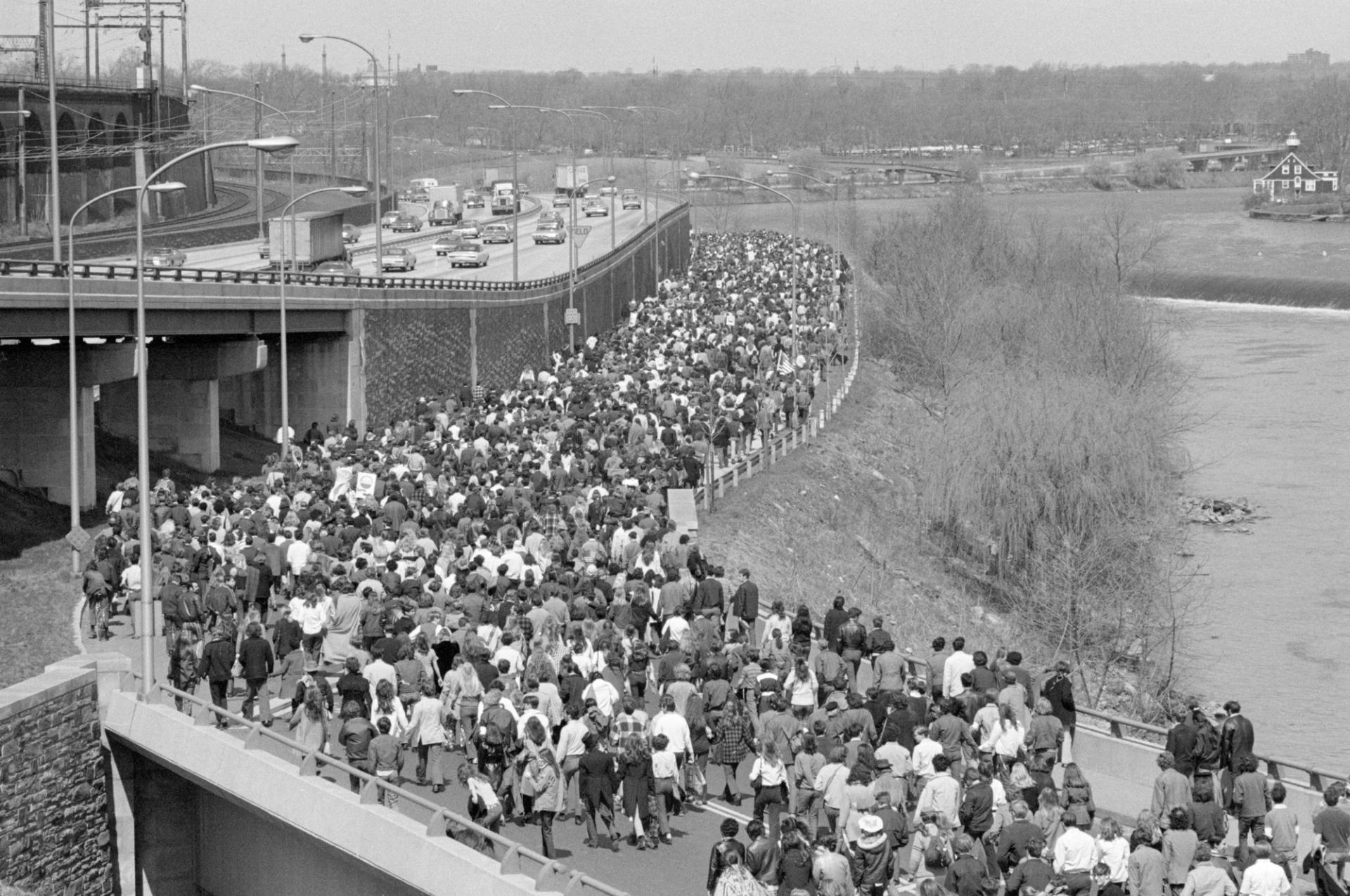
Environmentalists marched from the Philadelphia Museum of Art to Belmont Plateau on April 22, 1970. (Bettman / Getty Images)
Crowds at the plateau could view the soot-covered skyline, as Philadelphia’s air quality was impacted by the chemical plants, oil refineries, smelters, and incinerators operating at the time. A CBS report from 1970 about the event invoked the derogatory nickname “Filthadelphia” due to how much waste was in the city’s air and water supply.
The report also noted that much of the crowd was made up of young, middle class white people. While the vision for the event was to be welcoming of all people, from polluters to ordinary citizens, research from students at the University of Pennsylvania found many Philadelphians did not feel they had a voice at the event or that their concerns were taken seriously.
Despite its shortcomings, the nationwide event did lead to some results. In July of that year, the Environmental Protection Agency was established in response to growing demands from the public for more governmental accountability in water, air, and land protections.
By the 1980s, local fishers saw improvements in waterways that were once deemed “unfishable,” and area incinerators began to shutter.